
26.11.2026
Deterrents real and imagined
The present stand-off in the Gulf could run and run. Or there could be a sudden escalation. It is impossible to say, argues Yassamine Mather. Meanwhile, the situation inside Iran grows ever more desperate for working people
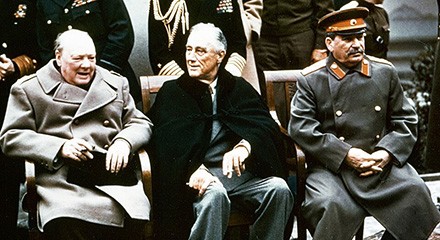
Sections of the global media lazily dubbed the trilateral meeting in Shenzhen between Xi Jinping, Donald Trump and Vladimir Putin as ‘Yalta 2.0’ (a reference to the World War II meeting between Roosevelt, Churchill and Stalin over February 4-11 1945). Flattered, Putin reportedly nodded approvingly when a Russian journalist suggested that the summit amounted to a “new Yalta”.
The comparison, however, is unconvincing. Unlike the 1945 Yalta conference, where a new post-war order was negotiated, Shenzhen produced no historic settlement, dividing the world into clearly defined spheres of influence. Behind the carefully choreographed photo-op and the 90 minutes of great-power talks lie unresolved competing interests, ongoing conflicts and a good deal of ambiguity.
As far as Iran was concerned, the influential think-tank, the Atlantic Council, had already warned that the sight of Xi and Putin discussing Iran with Trump could provoke unease in Tehran, raising uncomfortable questions about the reliability of its supposed strategic partners in Moscow and Beijing. Perhaps that is why the Iranian state-aligned media worked hard to turn this potentially embarrassing episode into a narrative of American humiliation.
The summit’s four-point ‘Declaration towards peace’ was remarkable chiefly for what was omitted. Beyond vague diplomatic platitudes, it offered no substantive commitments on the war involving Iran, the wider conflicts engulfing the Middle East or the continuing war in Ukraine. Its only concrete gesture was an agreement to open a dialogue on reducing nuclear risks and preventing proliferation.
In Tehran, Mohammad Mokhber, an adviser to supreme leader Mojtaba Khamenei, claimed the summit was evidence of Washington’s declining ability to mobilise international support against Iran. Trump, he insisted, had failed to secure his objectives. The Tehran Times echoed this triumphalist reading under the headline, ‘Trump leaves Shenzhen empty-handed’, arguing that neither Beijing nor Moscow had shown any appetite for joining Washington’s campaign to pressurise Iran.
But this celebratory account obscures a more troubling reality for Tehran. The refusal of China and Russia to join an American campaign against Iran is not the same as a commitment to defend Iran against US aggression. Xi’s reported reluctance to become deeply entangled in either Iran or Ukraine underlined the limits of Beijing’s supposed solidarity. Moscow too has its own strategic calculations, in which, not surprisingly, Iranian interests remain subordinate to Russia’s.
The real significance of the summit was therefore neither Trump’s alleged humiliation nor the emergence of a united anti-American front. It was the unmistakable demonstration that the great powers are prepared to negotiate over conflicts affecting other countries without necessarily giving those countries even a voice. For Iran, the uncomfortable lesson is that being useful to Moscow and Beijing is not the same as being indispensable to them - and that diplomatic opposition to Washington should never be mistaken for unconditional political solidarity.
In the meantime, the battle for control of the Strait of Hormuz - one of the most strategically important maritime chokepoints in the world - continues. The three central questions are:
1. Whether Iran can prevent commercial shipping from passing through the strait using missiles, drones, mines and naval forces.
2. Whether the US can impose an effective naval blockade on Iran itself. This means stopping Iranian oil exports and restricting shipping to and from Iranian ports. This is not the same as closing the strait to all shipping.
3. Whether a maritime confrontation could develop into a wider war, involving yet more attacks on Iranian territory.
Rival action
So where do things stand in the last week of November 2026, and how many ships are passing through Hormuz?
The latest weekly baseline is the report by United Kingdom Maritime Trade Operations, published on November 20. It shows a steep fall in traffic: 263 ships crossed the strait in seven days: that is 15% fewer than the previous week and, by UKMTO’s estimate, 65% below pre-war levels. Only 73 of those crossings were directly observed through AIS (Automatic Identification System) ship-tracking signals: the rest were US-reported facilitated transits that UKMTO could not verify. This is why live tracking websites tend to show much lower numbers.
Tanker traffic shows the same pattern. On November 21 the Financial Times reported that only 37 oil tankers had crossed in the latest week, down from 52 the week before. Provisional data suggest that oil volumes in the second week of November were close to half those of the first. (Daily figures since then come from sources that measure different things, so they should not be compared or added together.)
What can we conclude? Hormuz is not completely closed, but it is operating at a fraction of its pre-war capacity. The evidence points to severe disruption with intermittent passage, not a total blockade. We are seeing selective maritime coercion from Iran rather than an attempt to sink every vessel using the strait. By hitting some ships and letting others pass, Iran keeps shipowners uncertain as to which vessels are safe. Insurance costs, delays, damage and the fear of further attacks can then choke shipping without a continuous physical blockade.
Alongside this, the US is enforcing a naval blockade of Iranian ports and oil exports. The two campaigns are different: Iran is trying to control passage through Hormuz, while Washington is trying to cut Iran off from international maritime trade.
The blockade has moved beyond threats into active enforcement. On November 8, US forces disabled the commercial vessel, Huda, in the Gulf of Oman, accusing it of repeatedly trying to breach the blockade. US Central Command also says that 144 commercial vessels had been redirected by the end of October. Both figures come from the US military and have not been independently verified.
Washington has also set up ‘Task Force Iron Gate’, announced on November 7, to extend economic interdiction to Iran’s land trade routes and the Caspian Sea. Its initial staff were reported to number about 20 military and civilian personnel - an organisational unit, not a force preparing for invasion. This matters, because American pressure now extends beyond oil tankers to the wider trade links between Iran, China, Russia and central Asia.
On November 20, it was reported that Iranian oil tankers were gathering around Kharg Island and that Iran appeared to be preparing a convoy to test the American blockade. It also reported ship-to-ship transfers of oil at sea, some by vessels with their tracking systems switched off. On November 24 the maritime intelligence company, Windward, reported that satellite images showed 21 large tankers anchored off Kharg Island two days earlier - up from 17 on November 17. Tankers waiting at anchor do not prove that a convoy has set sail or confronted American forces, and what happens next remains unclear.
This could become a serious turning point. If the US blocks, attacks or boards Iranian tankers, Iran may retaliate against Gulf oil facilities or merchant shipping, which could drag in countries that have tried to stay out of the conflict. Two recent Financial Times articles are especially useful. The first, ‘Oil shipped through Hormuz falls, as Iranian strikes increase’ (November 21), reports falling oil shipments and rising Iranian attacks, and covers warnings that the United States may come under pressure to respond with military force. The second, ‘Is Trump stuck with Iran forever?’ (November 20), examines Washington’s difficult position: it has not won a clear military victory, it is enforcing the blockade, and it may launch fresh attacks.
As the question of a US land invasion is raised once more by Israel and sections of Trump’s supporters, we also need to consider what options such an operation might involve. A full-scale invasion of Iran would be a far larger undertaking than seizing a few strategically important islands.
Possible operation:
- Seize Kharg Island.
- Occupy Qeshm or Larak islands.
- Seize Abu Musa and the Greater and Lesser Tunbs.
- Conduct coastal raids.
- Launch a full mainland invasion.
Strategic objective:
- Disrupt Iran’s principal oil export terminal and exert economic pressure.
- Weaken Iran’s military control over the Strait of Hormuz: Remove Iranian military positions near strategic shipping routes.
- Destroy selected missile installations, radar systems and naval infrastructure.
- Defeat Iran’s armed forces or impose regime change.
Principal difficulties:
- Holding the island against Iranian missile, drone and naval attacks.
- Exposure to attacks from the Iranian mainland and the problem of maintaining supply lines.
- Risk of regional escalation and confrontation involving Gulf states.
- Limited, temporary military gains without sustained occupation.
- Enormous requirements for troops, logistics, prolonged occupation and political support.
There is a fundamental strategic problem: even if American forces captured the islands, Iran could continue to threaten shipping from the mainland. At this stage, limited island seizures or renewed air strikes are more plausible than a full-scale ground invasion. However, the available reporting does not establish that any new landing operation has been ordered or is imminent.
What happens next? Three scenarios stand out:
- Prolonged maritime and economic confrontation. The US maintains its blockade, while Iran continues selective attacks on commercial vessels. Oil shipments remain depressed, and economic pressure on Iran and the Gulf exporters intensifies. This appears most consistent with the current US approach.
- Renewed US-Israeli military escalation. An attack on an Iranian tanker convoy, a major loss of life at sea or another strike on Gulf infrastructure could provoke renewed bombing and possibly limited territorial operations.
- Negotiated reopening. Iran relaxes restrictions on shipping in exchange for phased relief from the American blockade. However, the underlying dispute over which side should concede first remains unresolved, and the US is also demanding concessions on Iran’s nuclear programme, which the Iranian regime is unlikely to accept.
Hormuz is an especially revealing example. Selective maritime attacks can push up insurance premiums and disrupt global energy flows without securing relief from the American blockade. Pressure on Gulf shipping also risks alienating neighbouring states, whose cooperation would be needed for any durable regional security arrangement. The military leverage that Tehran presents as protection may at the same time deepen Iran’s isolation and add to the economic burdens borne by the general population.
The confrontation has become a struggle over economic endurance and regional power. Washington possesses overwhelming conventional military superiority, but that does not automatically translate into the ability to guarantee safe commercial passage through a narrow waterway which has seen ships repeatedly hit and even sunk. Iran, meanwhile, retains the capacity to impose costs on international trade, but is itself suffering from the American blockade of its seaborne exports.
The result is a contradictory situation: both sides can inflict serious economic damage, but neither has shown that it can impose a stable political settlement on the other. For Iran, the danger is that prolonged economic strangulation will deepen the crisis facing ordinary people, while the state uses the external threat to justify further repression and militarisation. For the US, the danger is that economic pressure fails to achieve its political objectives, generating demands for ever more extensive military intervention. For the Persian Gulf monarchies, the danger is that a confrontation between Washington and Tehran turns their oil infrastructure, ports and commercial shipping into targets.
So the immediate risk is not necessarily a full-scale American invasion, but an escalation from economic blockade and selective maritime attacks to a new round of direct military confrontation, potentially including the occupation of Iranian islands.
The key developments to watch are whether the Iranian tanker convoy actually sails, whether American forces attempt to intercept it, and whether Washington responds to further attacks on shipping with strikes on Iranian coastal or island positions. Such events would be far stronger evidence of imminent escalation than general speculation about invasion plans.
Deterrence
Deterrence means persuading an adversary not to take an unwanted action. Mehdi Noorbakhsh - an international relations professor at Harrisburg University, speaking to BBC Persian - offers the simplest definition: if you hit me, I can hit back. Thomas Schelling saw deterrence as the art of influencing an enemy’s decisions - changing their calculations rather than destroying them. Glenn Snyder held that it works by threatening unacceptable costs, and succeeds only if the threat is credible.
Two types are usually distinguished. Punitive deterrence threatens retaliation severe enough to outweigh any gain, as in cold war nuclear theory. Deterrence by denial convinces the attacker that they will not achieve their goals, through air defences, dispersed infrastructure and protected sites. Combining the two improves the odds of success. Effective deterrence is generally held to rest on capability, credibility, political will, strategic clarity and domestic resilience, and credibility is often considered more important than power itself. Today, economic strength, technology, cyber capacity, intelligence superiority, public opinion and social cohesion also count as components of ‘national power’.
Every state builds deterrence to suit its circumstances. Before 1979 the shah’s Iran relied on conventional military strength and the American alliance, playing the role of ‘gendarme of the Gulf’. After the Islamic revolution, the war with Iraq, arms sanctions and an ideological foreign policy pushed the Islamic Republic towards a different model: missiles, drones, asymmetric warfare, cyber capacity, domestic resilience and the ‘Axis of Resistance’ network of regional allies. Ali Khamenei was its chief architect for about four decades. He argued that resistance has a cost, but that the cost of surrender is hundreds of times higher.
Noorbakhsh argues that Iran gives more weight to offensive tools than defensive ones. In his view, Iran did create some deterrence, but it eroded over time and did not work against the US; what remains is a retaliatory capacity rather than true deterrence. He says the Strait of Hormuz has lost value as a strategic lever, partly because of opportunities that Iran failed to take - chiefly the 14-point Islamabad agreement. He sees the Islamic Republic’s model and the shah’s “gendarme” role as having ended in the same way: both eroded, and Arab states reacted negatively to both.
A BBC Persian article entitled ‘From the “ghost of war” to “absolute deterrence”’ examines the failure of Khamenei’s repeated assurances that war could be avoided. What he once dismissed as the “ghost of war” materialised, and his prediction that “there will be no war” proved wrong. In under a year the Islamic Republic was engaged in two conflicts with the US and Israel: the 12-day war and the 40-day war. Under Mojtaba Khamenei, the policy his predecessor stressed appears to have hardened into ‘absolute’ and ‘maximum’ deterrence.
Ali Khamenei spoke variously of “deterrent power”, “defensive deterrence” and “active deterrence”. In August 2018, three months after Trump withdrew from the Joint Comprehensive Plan of Action nuclear deal, he declared, “There will be no war and we will not negotiate”, dismissing the threat of war as a “ghost” intended to frighten the nation and arguing that America would not start a war, because it would suffer the greater blow. He cited the 1980 Tabas operation - the failed attempt to rescue 52 American hostages held at the US embassy in Tehran - as proof of American vulnerability, though it is unclear how far an episode so different in nature can serve as a measure of Iran’s deterrence today. In May 2019 he called negotiating with the US a “double poison” and repeated that there would be no war.
In June 2019, Ali Khamenei called for deterrence in the economic, political and social spheres, saying that militarily the country had largely achieved it. In September 2022 he declared that Iran had reached the stage where there was no cause for concern over external threats - and that its enemies knew it.
In this contest, the two wars raised a fundamental question: if the Islamic Republic believed for years that it possessed deterrent power, why did it fail to prevent these conflicts or respond more forcefully after its political and military leaders were killed? And, did what its leaders called ‘deterrence’ meet the criteria of military and international relations theory?
Recent programmes on state television and platforms such as YouTube have debated the record. Hamzeh Rahim-Safavi, a political scientist at Tehran University and son of Yahya Rahim-Safavi, a senior adviser to the supreme leader, dates the collapse of deterrence to the 2007 killing of Hezbollah commander Imad Mughniyeh. Iran and Hezbollah promised revenge, but he says the response fell short of what was announced. Hadi Masoumi-Zare, an international relations analyst, places the start of the collapse in Iran’s response to the killing of Qassem Soleimani: by settling for a missile strike on Ain al-Asad base, he argues, Iran exposed the gap between threat and action.
Tasnim, an Iranian news agency close to the Islamic Revolutionary Guard Corps, rejects this assessment, claiming that Iran is far stronger today than during either war in military power, social cohesion and even economic resilience, despite inflation. But Ali Khamenei’s outlook appears to have remained unchanged after the 12-day war, which he said had left America and Israel defeated and empty-handed. Rahim-Safavi, however, said on state television earlier this month that the intelligence and deterrence system had failed in that war, and that the security apparatus had done nothing to prevent the 40-day war.
The new supreme leader (or his AI projection) has continued and intensified his predecessor’s approach. In his August 2026 decree appointing Ahmad Vahidi as IRGC commander, he called for “maximum deterrence” and readiness for “powerful offensive operations against the enemy”. At a meeting with senior commanders in late October he reportedly said that every threat must meet an immediate and effective response “without geographic limits”. In a message in early November he used the term “absolute deterrence”, saying that the only path to it was to continue the ‘stronger Iran’ strategy of all-round progress, with social unity as its key element. His concept rests on four pillars: ever-growing military capability; readiness to respond rapidly to any threat; national power in economic, scientific, technological and political terms; and social cohesion.
Noorbakhsh calls absolute deterrence unrealistic: no country, not even the US, has it in every domain. Today’s most effective deterrents are not necessarily military. China, for instance, avoided a direct arms race with America and instead raised the cost of conflict through mutual economic dependence. He also considers it a strategic mistake to draw Arab states into Iran’s deterrence equation. If they feel used as leverage in Iran-US crises, they will lose trust in Iran; he argues that Iran should pursue shared security arrangements with its neighbours rather than act as a regional ‘gendarme’.
The record is therefore mixed. Iran’s missiles, drones, regional capabilities and ability to widen a conflict are factors its rivals must weigh. Studies suggest that its missiles were intended to offset a weak air force and strengthen its capacity to retaliate. But the wars and direct strikes on Iranian soil show that these capabilities did not prevent military operations against the country.
Here the distinction between deterrence by punishment and deterrence by denial, outlined above, becomes crucial, because the maritime confrontation provides a practical test of both. The ability to punish shipping or energy infrastructure does not in itself prevent adversaries from striking Iran or stopping its exports. The credibility of a threat depends not only on the weapons available, but on whether an adversary expects the state to use them effectively and whether doing so would advance its political aims.
Applied to the current blockade, deterrence by punishment would mean convincing Washington that intercepting Iranian tankers or attacking coastal positions would have unacceptable consequences. Deterrence by denial would require Iran to frustrate the blockade or protect vital infrastructure and trade routes. The evidence presented here points to some capacity for punishment, but serious limitations in denial. It is this gap, rather than any lack of military firepower, that makes the claim of absolute deterrence unsustainable.
There is also a domestic dimension. Official invocations of national unity and resilience are hard to reconcile with the shortages, electricity rationing, workplace grievances and preventive security deployments described below. Social cohesion cannot simply be proclaimed by the leadership: it depends on material conditions and political legitimacy, and both military escalation and external economic coercion can erode those foundations.
Inside Iran
Iran is facing a renewed combination of social protest, fuel shortages, electricity rationing and intensified repression. These developments matter all the more because they coincide with the American maritime blockade and the aftermath of the US-Israeli war.
Iran’s national electricity company, Tavanir, announced on November 21 that it would introduce scheduled power cuts for households and businesses. These began on November 22, initially with interruptions of up to two hours every two days. Tavanir’s chief executive, Mohammad Allahdad, warned that the cuts could increase to two hours every day, as temperatures fall.
The immediate problem is a lack of fuel for power stations. According to Allahdad, wartime damage reduced Iran’s gas production capacity by approximately 230 million cubic metres per day. Some capacity has been restored, but output remains below last year’s level. The energy crisis has several causes: wartime damage to infrastructure, longstanding underinvestment, inefficient electricity generation and distribution, and difficulty securing enough gas for power stations.
Although Tehran is a major focus, the restrictions apply to the national grid as a whole, and exact schedules remain subject to local announcements. Outages have already disrupted schools, internet connections and municipal water pumps in cities such as Tehran and Mashhad. President Masoud Pezeshkian has acknowledged that attacks on gas infrastructure have aggravated the energy imbalance and that this will cause significant difficulties this winter, adding that industrial and productive sectors would be the last to be cut. Meanwhile, industrial estates already face steep electricity tariffs (up to 4.5 times the official rate) and gas restrictions affecting cement and petrochemical output, while one MP has warned that continuing power shortages threaten more than a million jobs.
Then there are bread quotas and ‘purchase management’. Last week, the interior ministry quietly activated a rationing mechanism through bakery payment terminals in several provinces, without any prior public announcement. Under the cap, each citizen is allotted roughly 8kg of flour a month at a subsidised rate; bread bought beyond that quota is charged at the free-market rate - more than five times as much.
Then we have eggs and poultry. According to domestic media reports on November 22, a tray of 30 eggs reached a record 800,000 tomans - up from 315,000 tomans in March 2026. Chicken prices have climbed similarly, to around 360,000 tomans per kilogram.
When it comes to dairy produce, retail milk prices jumped sharply in late November, following government approval of higher raw milk prices. In Tehran, the price of a 900-gram bottle rose by as much as 20,000 tomans in a single day - up to 180,000 tomans.
Yet it is not just price rises that lead to anger and protests: it is the grotesque levels of inequality. Last week a relative told me she had attended a celebration where the chef was flown in from Paris for the event and produced an unbelievable feast. She was so disgusted by all this that she left promptly. However, the underlying fact remains the same: while the poor struggle to pay for bread, war, sanctions and everything else have had little effect on the extravagance of the super-rich.
The monthly minimum wage is around 16.6 million tomans (roughly $61 at the open-market rate), government food vouchers cover only a fraction of basic food costs, and headline inflation could soon approach 90%-100%. The combined pressure of fuel costs, inflation and outages has triggered nationwide strikes by lorry drivers from around November 22, raising yet more concerns about further disruption to supply chains.
On November 17 hundreds of people protested in Abdanan, Ilam province, after a bus crash killed 13 oil-industry workers. Demonstrators initially demanded accountability for unsafe transport, but some later chanted against the government. There are, however, doubts about the anti-regime slogans reported by Persian-language foreign media, amid allegations that fake audio was added to social media videos of the demonstrations. Earlier this month, students at Tarbiat Modares University in Tehran demonstrated over rising canteen prices.
There are also problems in relation to the following:
- Bread: purchasing controls on subsidised bread now reportedly cover seven provinces, amid rising prices and supply problems.
- Petrol: long queues and shortages have been reported in Hormozgan, Urmia and Zabol.
- Electricity: rolling power cuts are underway, as winter demand rises.
These pressures reinforce one another. Power cuts can interrupt industrial production, reduce workers’ earnings and raise business costs, while higher food and transport costs put further strain on households. Workers’ protests over wages, transport safety and working conditions also point to mounting pressure on household incomes.
These are separate protests arising from different grievances, and there is no evidence that they amount to a coordinated nationwide uprising. However, they demonstrate the interaction between domestic and external pressures. If protests become more widespread, we can expect severe repression. Just in case anyone thought the regime has softened its attitude, remember that at least 51 protesters and political prisoners have been executed in Iran in the first 10 months of 2026.
And on November 23, singer Parastoo Ahmadi was given 74 lashes in Qom for a 2024 YouTube concert, where she sang without wearing a hijab. Four members of her team (three musicians and a producer) were flogged with her. All five were convicted of “offending public decency” and banned from performing and travelling abroad for two years.
Two competing political arguments should be considered. On the one hand, the government can blame shortages on foreign military attacks and economic pressure, potentially strengthening its national-security arguments. On the other, prolonged shortages may deepen public discontent with the authorities, particularly where people already associate poor services, inflation and job insecurity with their own government’s mismanagement.
The critical question over the coming weeks is whether shortages and industrial disruption remain separate economic grievances or become the basis for wider, more politicised, collective protest.