
29.10.2026
No clear outcome
There will be weeks of haggling, offers of bribes and ominous threats of all kinds. The Arab-majority parties might well be involved in this grubby business. But when it comes to the oppression of the Palestinians within and without Israel, no fundamental change should be expected, argues Yassamine Mather
As widely predicted, Israel’s election has produced no clear winner, but it has given a considerable boost to the two Arab-majority blocs, whose 19 Knesset members might well determine whether or not Benjamin Netanyahu remains in office as prime minister.
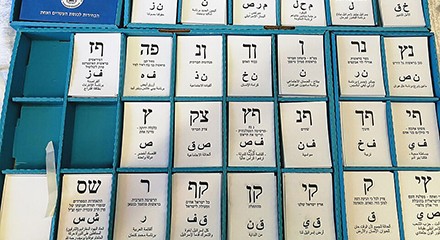
Overall turnout was 77.7%, the highest since 1999 and more than seven percentage points above the 2022 election. Participation among Arab citizens was estimated at around 80%, an historic high. Projections put the Netanyahu-led bloc on 53 seats, the opposition led by Gadi Eisenkot’s Yashar! on 51. Clearly, neither bloc, if they maintain their unity, can command the 61 seats needed to form a majority government.
Understandably, the election attracted extensive international coverage, much of it focused on Netanyahu’s far-right allies and their inflammatory statements. These statements are not primarily intended for foreign journalists, whom these politicians openly hold in contempt: they are addressed to an Israeli-Jewish electorate, in which nationalist and chauvinist politics have become increasingly normalised.
Mainstream coverage also tends to present Israeli elections as evidence of the country’s ‘democratic’ credentials, while ignoring the exclusion from the political process of 5.5 million Palestinians under occupation, the historical foundations of the Israeli state in Palestinian dispossession and the systematic genocide of at least 74,000 Palestinians in Gaza, alongside thousands more affected by what the United Nations now terms the “ethnic cleansing” of the West Bank.
Arab vote
The scale of Arab participation is perhaps the most important development. In Nazareth, turnout reportedly reached 72.2%, compared with 48.3% in 2022. This change appears to reflect several overlapping concerns: opposition to Netanyahu and his far-right ministers, anger over the war in Gaza, discrimination against Palestinian citizens of Israel, frustration over violent crime and the failure of successive governments to provide adequate public services and security.
The Joint List, a leftish Arab-majority bloc consisting of Hadash, Ta’al and Balad is on course for 11 KMs. Ra’am, the Islamic bloc led by Mansour Abbas, is projected to get eight. This matters because if Gadi Eisenkot’s bloc could combine with these two, that would make 66 KMs - enough to defeat Netanyahu arithmetically, but not to form a politically viable coalition. Joint List and Ra’am may provide the numbers needed to install Eisenkot as PM, while remaining outside what would be a minority government.
It must be emphasised that mainstream Israeli-Jewish politics is not determined by class and does not neatly map onto the traditional left-right spectrum. The Democrats is expected to secure no more than eight seats. Once, as the Labor Party, it was by far the dominant force, proclaiming its commitment to strong trade unions, state ownership and a colonial, Zionist, socialism. Now the Democrats vote comes mainly from the Ashkenazi middle and upper-middle classes and more prosperous areas of Tel Aviv. How to oppress the Palestinians, security, ethic background, religion and non-religion are now the key deciders. The poorest sections of the mainly secular Israeli-Jewish working class tend to vote for parties of the right and the far right: Likud, Beyachad, Yisrael Beyteinu and Otzma Yehudit. Religious people vote according to their sect: most pronounced with Shas and the United Torah Party. Their vote comes from Sephardic and Haredi Jews, who happen to include the poorest, most impoverished sections of the Israeli Jewish masses. As for Hadash and the Joint List, their vote comes from the non-religious and less-religious Arab population. No more than 10-15,000 Israeli Jews are thought to have voted for the Joint List - a tiny percentage of its overall vote.
There is also a political irony in the much enhanced Arab turnout. As Haaretz reported, Netanyahu repeatedly sought to mobilise Jewish voters by portraying participation by Palestinian citizens as an electoral threat. On October 27, he published 27 posts on X: 17 of them warned about Arab turnout. He circulated photographs of Arab citizens voting alongside images of allegedly empty polling stations in Likud strongholds, claiming - without evidence - that his opponents were trying to “steal the election”.
In recorded appeals, Netanyahu alleged that police had caught three senior Joint List officials carrying sinister envelopes of cash and that leftwing Jewish women were escorting Arab women to polling stations. He also warned of people being bussed in and long queues in Arab towns, and urged his supporters to vote Likud to keep the Palestinians in their place as a thoroughly marginalised section of the population.
The question is whether the Arab parties’ electoral gains can translate into real political power. Mansour Abbas has made his position clear. Speaking to Israel’s Channel 12, he expressed hope that Ra’am and the anti-Netanyahu bloc could together reach the 61 seats needed to replace the government.
Abbas said that both principal blocs had been in contact with his party before and after the election. Asked about opposition leaders Naftali Bennett and Avigdor Lieberman, who have rejected cooperation with Arab-majority parties, he indicated that these objections would have to be addressed during post-election negotiations.
Ra’am has experience of coalition government. In 2021 it joined the Bennett-Lapid coalition, becoming the first Arab-majority party to participate formally in an Israeli governing coalition. In exchange, it sought investment in Arab and Bedouin communities, improvements in infrastructure and measures to tackle violent crime.
The Joint List occupies a different political position. Its constituent parties have traditionally rejected participation in governments committed to maintaining Israel’s existing Zionist political framework, although they have shown varying degrees of willingness to support a government from outside.
The alliance brings together distinct political traditions. Hadash, whose core includes the Communist Party of Israel, has Hebrew KMs, but, as already noted, almost entirely relies on Arab votes. It supports Israel withdrawing to its pre-1967 borders and a Palestinian state. Ta’al, associated with Ahmad Tibi, emphasises Palestinian national rights and equality for Arab citizens. Balad advocates transforming Israel into a state of all its citizens rather than one constitutionally defined by Jewish-Israeli national supremacy.
The Joint List could therefore support the removal of Netanyahu without accepting cabinet positions or endorsing the programme of an Eisenkot-led government. On October 28, Joint List chairman Yousef Jabareen publicly signalled readiness to help replace Netanyahu, insisting that any serious alternative would have to engage with his bloc.
Eisenkot has previously ruled out a coalition with Arab-majority parties, although a figure close to him, Yoram Cohen, has suggested that Ra’am might be acceptable if it met Yashar!’s conditions. Yair Golan of the Democrats has called for the anti-Netanyahu parties to cooperate with Arab-majority representatives to secure a majority. Bennett and Lieberman remain opposed. The public disagreement underlines the difference between a theoretical anti-Netanyahu majority and a government that its component parties are prepared to support.
Netanyahu faces difficulties within his own camp. His coalition depends on ultra-Orthodox parties such as Shas and United Torah Judaism, which defend religious schooling, yeshiva funding and exemptions from military conscription. These demands conflict directly with Lieberman’s insistence that ultra-Orthodox young men should serve in the armed forces. That disagreement makes some possible coalition combinations difficult, although Israeli politics has repeatedly demonstrated that politicians can revise apparently immovable positions during the processes of negotiations.
Israel has already experienced rotating prime ministers, governments bringing together ideological rivals and coalitions assembled primarily to remove an incumbent. A national unity government involving Likud and sections of the opposition is another possible negotiating formula.
President Isaac Herzog will be formally consulting the parliamentary parties in early November before selecting someone who might be able to cobble together a government. The largest party, still Likud, does not automatically get the mandate; the decisive question is putting together enough Knesset numbers to get over the 61+ threshold. So expect bribes, defections and endless horse-trading. If all else fails there could well be another general election.
War generation
The record Arab turnout should not obscure a parallel development within the Jewish electorate: the continued strength of the nationalist right, particularly among younger voters.
More than half a million Israelis were eligible to vote for the first time. Pre-election surveys suggested that this generation is more rightwing than its parents. A Yedioth Ahronoth poll found that more than 16% of first-time voters intended to support Itamar Ben-Gvir’s Jewish Power or Bezalel Smotrich’s Religious Zionism. A Channel 12 survey found that nearly three-quarters identified themselves as rightwing or centre-right.
Ben-Gvir’s career illustrates the transformation of Israeli politics. When he reached military age, the army refused to conscript him because of his extremist views. Three decades later, he serves as national security minister and participates in the government’s inner security deliberations. Several western governments have sanctioned him over incitement against Palestinians.
For Palestinians in Gaza and the occupied West Bank, the question of who becomes prime minister has some importance, but it should not be confused with a fundamental choice between occupation and liberation.
Netanyahu’s government has overseen genocide, devastating wars, settlement expansion and increasing settler violence. His far-right allies openly advocate annexation of the West Bank and policies encouraging or imposing a Palestinian exodus from Gaza.
Yet the main opposition parties do not offer a programme based on ending Israeli control and recognising Palestinian national sovereignty. Eisenkot and other so-called centrist figures reject the establishment of a sovereign Palestinian state. Their preferred approach emphasises Israeli security control, separation from Palestinian population centres and regional arrangements with Arab governments.
Eisenkot opposes some settlement initiatives, including the E1 project, and has advocated action against unauthorised outposts and extremist settlers. These positions distinguish him from Netanyahu’s far-right partners, but they do not amount to support for Palestinian self-determination. Bennett and Lieberman occupy positions further to the right on territorial questions. Golan and the Democrats are more critical of settlement expansion and offer a different approach to relations with Palestinians.
The differences should not be dismissed, particularly where they affect settlement policy, the use of force and the daily lives of Palestinians. But the main Jewish-led parties remain broadly committed to Israel retaining decisive control over security arrangements in the occupied territories.
The differences between Netanyahu and his principal rivals are very limited when it comes to Iran. Following direct military confrontations between Jerusalem and Tehran, much of the Israeli political establishment regards the Islamic Republic as the country’s central external strategic threat.
Netanyahu has advocated regime change in Tehran and presents military confrontation as an essential element of Israeli security. His opponents frequently criticise his management of the confrontation rather than the underlying objective of weakening Iran. Lieberman opposes agreements that leave the Islamic Republic’s strategic capabilities intact. Bennett’s approach, associated with his ‘octopus doctrine’, favours striking Iran directly rather than concentrating solely on its regional allies.
Eisenkot describes Iran as Israel’s gravest external threat and has expressed support for the end of the Islamic Republic, while arguing that political change must come from within Iran. Golan has questioned the feasibility of achieving regime change through bombing and argues for more clearly defined military and political objectives. There are tactical disagreements over timing, diplomacy, escalation and the role of the United States. But the broad consensus in favour of confronting Iran extends well beyond Netanyahu’s coalition.
The Arab parties, particularly Hadash and sections of the Joint List, have been among the most consistent parliamentary opponents of Israeli and American military action against Iran. As Danny Citrinowicz, a former head of the Iran desk in Israeli military intelligence, told BBC Persian, a change of prime minister would not necessarily produce a significant change in Israel’s approach.
A different government might alter the timing, scale or presentation of military operations. It would not end the strategic rivalry.