
15.10.2026
Modern wars, ancient myths
As the flame of war spreads across the region, Yassamine Mather looks at Saudi Arabia’s vulnerability, the misinformation surrounding the Houthis and Marco Rubio’s dangerous clash of civilisations nonsense
Saudi intervention in Yemen, attacks on Riyadh airport, strikes on pipelines and threats to Red Sea shipping - all demonstrate how rapidly the flames of war can spread.
Meanwhile, Donald Trump’s energy deal with Russia, China’s pledge to safeguard Iran’s “legitimate interests”, Vladimir Putin’s offer to mediate between Iran and the US and Moscow’s close relations with Tehran show that this is all part of a much wider geopolitical game of musical chairs.
Yet something else is happening alongside the expansion of armed conflict. There is an attempt to transform a thoroughly modern phenomenon - rival states, military alliances, access to oil, nuclear programmes, markets and imperial interests - into an ancient struggle between civilisations.
Marco Rubio’s extraordinary speech in Athens provides perhaps the clearest example. By invoking Xerxes’ invasion of Greece in 480BC and moving seamlessly from ancient Persia to contemporary Iran, the US secretary of state presented today’s conflict as the latest chapter in a confrontation stretching back 2,500 years. History is being pressed into the service of propaganda.
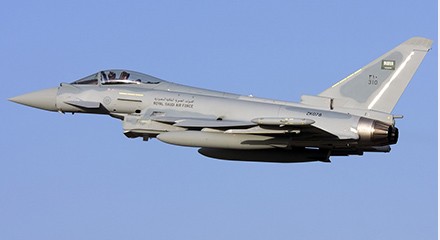
The attacks on King Khalid International Airport in Riyadh expose another contradiction. Saudi Arabia was the world’s eighth-largest military spender in 2025, reaching approximately $83.2 billion - around 6.5% of gross domestic product - making the kingdom by far the biggest spender in the Middle East. Yet the airport serving its capital remains vulnerable to further attacks from Yemen’s Houthi ‘rebels’.
This should tell us something about the economics of modern warfare. Saudi Arabia has spent vast sums purchasing sophisticated US and European weapons, aircraft, missile-defence systems and surveillance technology. Its armed forces have benefited from decades of western training, logistical assistance and technical support.
Nevertheless, cheap drones and missiles can penetrate or overwhelm immensely expensive defence systems. As the US has itself discovered in its confrontation with Iran, the economics are absurd: a low-cost drone can be successfully intercepted by a missile, but that missile can cost millions of dollars.
But Saudi military expenditure serves purposes beyond defending its own territory. It represents a highly profitable relationship with the western arms industry and reinforces Riyadh’s strategic dependence on Washington. Arms sales are not simply commercial transactions or technical decisions about defence: they bind ruling classes, military establishments and states together.
From 2015 the Saudi-led coalition, armed and supported by western powers, subjected Yemen to years of aerial bombardment and blockade. The consequences for the population were catastrophic. Despite overwhelming superiority in conventional weaponry, Saudi Arabia failed to defeat the Houthis (officially known as Ansar Allah or Ansarullah). Indeed, Sana’a, the capital city of the so-called ‘internationally recognised government’ has been in the hands of the so-called ‘rebels’ for more than a decade. And now the war is coming home to Saudi Arabia itself.
Almost every western news outlet describes the Houthis as ‘Iran-backed’. Sometimes the phrase appears so mechanically that it functions almost as part of their name. Iran certainly has relations with Ansar Allah and has provided support. But reducing the movement to an Iranian proxy distorts both its history and the present-day realities of the situation in Yemen.
Ansar Allah emerged from the political, social and religious conflicts of northern Yemen. Its origins lie in the Zaydi revivalist movement of the 1990s - not in some Iranian plan for regional domination. The Houthis seized Sana’a in September 2014 and subsequently consolidated their authority across much of northern and western Yemen, including its most densely populated areas.
Whatever else they are, after 12 years controlling the capital and governing millions of people, simply calling them ‘rebels’ makes less and less sense. They constitute a de facto state authority. Their rule is authoritarian, their opponents face repression and socialists have no reason to prettify their politics. But political analysis requires considerably more than attaching the words ‘Iran-backed’ to every organisation Washington or its allies dislike.
The terminology serves a purpose: Yemen’s internal political conflicts, class divisions, regional inequalities and history disappear; instead, everything becomes another front in Iran’s supposed expansion across the Middle East. Saudi Arabia and its western supporters can then appear as defenders of regional order rather than protagonists whose ill-considered intervention has helped to devastate Yemen.
Rejecting this narrative does not mean converting Ansar Allah into an ‘anti-imperialist’ force deserving automatic support. Such ‘campism’ has already badly damaged the left.
Ancient enemies
Rubio’s Athens speech performs a similar ideological operation on a grander historical scale. He invoked Xerxes’ capture of Athens, the destruction of temples and the Acropolis, before leaping to the Islamic Republic and contrasting supposed western notions of duty and loyalty with what he called the “culture of death”, represented by Iran’s hardline clerics.
The manoeuvre is crude. Two and a half millennia disappear. The Islamic Republic becomes the continuation of the Achaemenid empire and Washington appoints itself heir to Athens. There is, of course, no continuous 2,500-year conflict between an entity called ‘Iran’ and another called ‘the west’. Nor were the Greco-Persian wars simply an ancient confrontation between freedom-loving Europeans and oriental despotism.
The sprawling Achaemenid empire incorporated many different peoples, including a substantial Greek-speaking population in what is now Turkey. Hence many Greeks fought on the Persian side during the ‘Greek wars’. No less to the point, projecting a unified ‘west’ and ‘east’ backwards onto the ancient world is historical nonsense. Neither Greeks nor Persians understood the innumerable wars of their day through Samuel Huntington’s ridiculous categories.
There is another problem. As Pierre Briant has emphasised in his book From Cyrus to Alexander, our understanding of the Achaemenids comes largely through Greek sources, written by participants in, or inheritors of, conflicts with Persia. It therefore has an inherent ‘Hellenocentric’ bias and requires critical treatment. Rubio does the opposite. His version resembles the ideological universe of the 2006 fantasy action film 300, which retold the famous battle of Thermopylae: Persians appear as representatives of an exotic, irrational and threatening east, while the Greek Spartans embody freedom and civilisation. This is not merely extraordinarily bad history: it has a contemporary political function. Once an opponent is recast from a state into a civilisation, war against it can be represented as something more than a political choice: it becomes the continuation of an ancient and supposedly unavoidable struggle.
Nowadays, of course, Iran increasingly occupies the place previously assigned to Islam as the civilisational enemy. This matters. Criticism of the Islamic Republic is one thing: threatening Iran as a country, a society and a civilisation is quite another. Trump’s talk of reducing Iran’s infrastructure to ruins or destroying an “entire civilisation” implies collective punishment.
There is an irony, however: the Islamic Republic has responded to Washington’s civilisational mythology by producing one of its own! Instead of rejecting Rubio’s attempt to turn ancient history into contemporary propaganda, Iranian officials have searched for more favourable historic episodes. Mohsen Rezaei (secretary of the Supreme National Security Council) invoked the Roman emperor, Valerian, kneeling before the Sasanian king, Shapur I. After the disastrous battle of Edessa (260 CE) he became the first and only Roman emperor to fall into enemy hands. He served as Shapur’s living footstool and died a humiliating death.
This is a remarkable shift. For decades the Islamic Republic treated much of pre-Islamic Iranian history with deep suspicion. Its legitimacy supposedly derived from Islam and the 1979 revolution, not Cyrus, Xerxes or the Sasanians. Now we see Achaemenid soldiers, patriotic songs and images of a defeated Valerian. Why? Because a regime suffering from profound internal contradictions and declining ideological legitimacy has rediscovered the usefulness of nationalism. The message shifts from ‘Defend the Islamic Republic’ to ‘Defend Iran’. That enables the regime to obscure the difference between opposing imperialist aggression and supporting the existing state. Criticism of the Islamic Republic can be denounced as weakening the nation in wartime.
Washington and Tehran therefore feed each other ideologically. Rubio turns today’s Iran into ancient Persia; the Islamic Republic responds by proclaiming itself heir to Persia’s ancient greatness, replacing politics and class with mythology.
Iranian left
For the Iranian left, accepting either narrative would be disastrous. Opposition to US and Israeli aggression does not require political support for the Islamic Republic, just like opposition to the Islamic Republic does not require support for Washington, Israel or their project for restructuring the Middle East.
There is another absurdity. While Rubio describes an almost eternal confrontation between Persia and the west, Vladimir Putin is attempting to present Russia as a mediator. Putin has spoken with Iranian president Masoud Pezeshkian and conveyed Iranian positions to Trump. Tehran says proposals have been exchanged concerning an end to the war and reopening the Strait of Hormuz.
But Russia is no neutral arbiter. Moscow has its own strategic relationship with Tehran and is simultaneously fighting a war in Ukraine. Russian calculations involve energy prices, relations with Washington, sanctions and its position within the international state system. Indeed, disruption to Persian Gulf energy supplies can benefit Russian energy exports, even while Moscow calls for peace. There is no reason for socialists to transform Putin into an ‘anti-imperialist’ statesman simply because there is a conflict of interest between Washington and Moscow. Russian state interests remain Russian state interests.
Trump, meanwhile, claims that neither Russia nor China is providing meaningful assistance to Iran, arguing that Washington would know if they were. Yet this sits uneasily with the attention paid to Iran in US-China discussions. When Xi Jinping was in the US, both American and Chinese accounts indicated that China’s relationship with Iran was high on the agenda.
The contradiction is revealing. Beijing and Moscow may oppose aspects of US policy and maintain close relations with Tehran, but neither operates according to some abstract principle of ‘anti-imperialist solidarity’. Their calculations are those of states pursuing their own economic and geopolitical interests. This is why the conflicts cannot be separated into neat camps. Iran, Ukraine, Saudi Arabia, Russia, China and the United States (not to mention Gulf energy supplies) increasingly intersect.
Riyadh’s dilemma
As the war expands, so does the mythology used to justify it. The current manoeuvring around Israel makes the contradictions even clearer. Benjamin Netanyahu is reportedly seeking Saudi agreement, through US mediation, for Israel to participate directly in military operations against the Houthis. Saudi crown prince Mohammed bin Salman, however, has resisted such a move - not least because of the potential domestic and regional repercussions of appearing to facilitate an Israeli assault on Yemen.
That disagreement should not be mistaken for some principled Saudi opposition to Israeli militarism. Riyadh spent years bombing Yemen itself. What has changed is the political calculation. Saudi Arabia now has to weigh its hostility towards Ansar Allah and its strategic relationship with Washington against the danger of becoming directly involved in a Yemen war alongside Israel.
Here again, talk of permanent camps becomes misleading. Israel, Saudi Arabia and the US share significant strategic interests, but those interests are not identical. Alliances between capitalist states are neither friendships nor expressions of common moral values: they are arrangements continually renegotiated according to changing circumstances and ruling class interests.
The people of Yemen, meanwhile, have no interest in becoming pawns in somebody else’s story about an Iranian-Saudi confrontation, an Israeli-Iranian war or a supposedly ancient struggle between civilisations. Nor do Saudi workers have an interest in the billions transferred to western arms corporations in the name of a ‘security’ those weapons demonstrably cannot guarantee.
Our starting point must be working class political independence from all the rival camps:
- Against US imperialism and Israeli aggression certainly - but without prettifying the Islamic Republic.
- Against Saudi intervention and western arms sales - but without transforming Ansar Allah into a socialist or anti-imperialist force.
- Against Washington’s attempt to construct Iran as a civilisational enemy - but equally against Tehran’s attempt to mislead Iranian workers with nationalist myths.
The central conflict is between the politics of competing states and ruling classes, on the one hand, and the interests of the working class and the poor, on the other. As the flame of war spreads, that distinction becomes more important, not less.