
30.04.2026
A surfeit of slogans
Obviously the CPGB made mistakes. But they stemmed from national conditions and circumstances, not Stalin’s diktats. Jack Conrad marks the centenary of the 1926 General Strike
Autopsies on the General Strike - and, either directly or indirectly, the role of the CPGB - fall into four main categories.
First, the far right - a political position epitomised by Winston Churchill. He instinctively understood the unconstitutional nature of the General Strike: “There is the greatest difference between an industrial dispute, however lamentable, and a general strike. A general strike is a challenge to the state, to the constitution and to the nation.”1
During this period he entertained visions of himself becoming Britain’s Benito Mussolini: Churchill was of the opinion that el Duce had “rendered a service to the whole world” by destroying “subversive forces” in Italy.2 Bolshevism had to be crushed in Britain too. Churchill brooked no compromise with the trade unions: indeed he thought “a little blood-letting” would be a good thing. A statement which had the normally lily-livered New Statesman pretending not to know quite how to respond. However, on balance, its editorial offered the opinion that, to “be on the safe side”, it would probably be best “that he should be hanged” on a lamp post.3
In the event of a successful workers’ revolution, Churchill should certainly have been punished. Me, I would have advocated a show trial. That is a demonstrably fair, BBC-broadcast trial, before 12 randomly selected men and women, where he would have been allowed to choose his own council … something along the lines of Nuremberg 1945-46. And, having been found guilty of conspiring to commit murder on a mass scale, for guilty he undoubtedly was, Churchill should have been given an appropriate sentence.
Not hanging the bastard - we are better than that. But, showing our respect for human life, re-education through a good spell of healthy manual labour in the gardens of Chartwell (a specialist hospital established after the revolution for sick Kent miners undergoing treatment for killer diseases such as pneumoconiosis and silicosis).
Second, the bourgeois mainstream. The underlying assumption of Labour and Tory opinion alike is that in 1925-26 events conspired to take an unenthusiastic TUC into dangerously unconstitutional waters. Former Labour grandee Philip Snowden wrote in his 1934 memoirs that the trade unions “needed a lesson on the futility and foolishness of such a trial of strength”.4
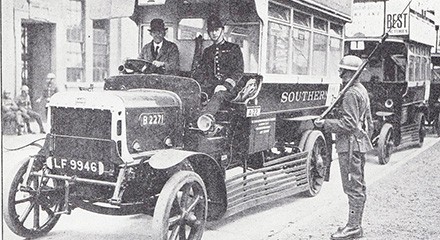
Thankfully, though, the whole unfortunate episode was conducted in the reasonable manner that typifies us Brits. Eg, football matches between strikers and police, and upper-class twits driving buses and trams just for a wheeze. Anne Perkins’s A very British strike (2006) is typical of this “studied moderation” genre and was, at the time of publication, fittingly promoted by David Cameron’s Conservative Party.5 The ‘modernising’ Cameroons wanted distance from the ‘toxic’ Thatcherites. According to this version of events, the constitution proved robust enough to see off misdirected trade union power and could thereafter continue to evolve in a gradualist fashion. Well, till the late 1960s at least.
Third, the ‘official communists’. The Morning Star’s Communist Party of Britain blames the “right wing” of the TUC for the defeat of the General Strike. Reflecting the CPB’s own politics, it thereby exonerates the left Labourites. Naturally, the CPB is full of praise for the CPGB of 1926. But there is no criticism because there is no thought. The slogan, ‘All power to the TUC’, goes unnoted, as does the role of Comintern. Nor is there any discussion of whether or not there was a revolutionary situation.6
Fourth, the orthodox Trotskyites. Britain was gripped by a revolutionary or pre-revolutionary situation in 1926 - they are clear on that. However, because of the baleful role of Comintern and Joseph Stalin, the CPGB held back from criticising the Labour lefts before the General Strike. Instead of banking on the National Minority Movement, there should have been more efforts to build a mass CPGB. At least that is what Leon Trotsky argued. Comintern’s wrong line, he forthrightly maintained, disarmed the working class in Britain, as did misplaced slogans, such as ‘All power to the TUC’.
But who could have and who should have taken power in May 1926? And in the name of what programme? Most Trotskyites are altogether vague or even silent when it comes to such a basic question. After all, the CPGB had no more than 5,000 members at the time, and that in a country of over 40 million.
The implication being that there was a general strike road to socialism. Something more than confirmed by the continued usage of the hoary old slogan, ‘TUC get off your knees, call the general strike’. There are many variations on the theme, but the essence remains the same. Once the general strike is called, spontaneity will do the rest. The tiny group, somehow chosen out of the 57 varieties, is taken, almost by predestination, crashing through the gates of power, within a month, simply by the sheer momentum of events.
The other 56 are, of course, left far behind in the slough of irrelevance. The illusion is almost universal amongst the milieu, albeit given a different twist according to the needs of each particular confessional sect: Workers Revolutionary Party, Revolutionary Communist Party, Socialist Workers Party, etc, etc.
Confusion
Lack of a correct strategic perspective resulted in the CPGB’s failure, at this auspicious and fateful moment, to make the decisive leap into mass politics. That, I believe, is a correct assessment. Admittedly, CPGB membership doubled, what with the nine days of the General Strike and the subsequent six month-long miners’ lockout. A great, albeit fleeting, achievement.
But the possibilities were far bigger ... if the strike had been taken through to a victory of some kind. It is not that the CPGB would have/could have leapt from a membership of 5,000 to 500,000 within a couple of weeks (that would be asking too much). But a membership in the tens of thousands was well within the grasp of the 1926 CPGB … and from there to the hundreds of thousands needed before communists can realistically think about any immediate prospect of taking power.
Strategically the task before the CPGB was to establish itself as an alternative centre of authority to the trade union and labour bureaucracy. That could have been done through the National Minority Movement or the councils of action … or perhaps simply through the growth of the CPGB itself.
That could not have been done, though, by flattering, sowing illusions in, the ‘official’ lefts in the trade unions and Labour Party. True, that was not done all of the time, but it was done enough of the time. And that mixed message clearly resulted from confusion above in the CPGB and could only but multiply confusion below in the CPGB … and way beyond.
It is certainly the case that any united front runs the risk that, if communists ruthlessly, effectively, criticise the ‘official’ lefts, then they will simply walk … but better that than holding back on criticism to keep them on board. If they walk, the calculation must be that they will expose themselves to their mass base for what they really are: rank opportunists of one stripe or another. In other words, united fronts are tactical.
Even the ‘permanent united fronts’ in the Russian Revolution saw the Mensheviks, including the left Mensheviks led by Julius Martov, along with the Right Socialist Revolutionaries, eventually walking. They stormed out of the Second All-Russia Congress of the Soviets after the Bolsheviks seized power in the name of their expected majority (along with their Left SR allies). Criticism in soviet debates over the Provisional government, the inter-imperialist war, the secret treaties, land to the peasants, etc, became, with the October Revolution, the criticism of weapons. Soviets continued … but increasingly, especially with the civil war, as shadows of their former selves.
Exploiting the contradictions between left and right reformism is good politics - if it advances the cause of communism. But the CPGB actually fostered illusions in the labour bureaucracy - a mistake encapsulated in the slogans, ‘All power to the general council’ … or ‘All power to the TUC’. Even though the usual slogan carried in leaflets, bulletins and manifestos was ‘More power to the TUC’, the fact that ‘All power to the general council’ could be used at all shows that the CPGB leadership, or at least its majority, suffered from the syndicalistic notion that the TUC general council could act in a revolutionary way, take state power and provide the paradigm of socialism in Britain.
The more modest slogan of ‘More power’ stemmed from a legitimate desire to overcome sectionalism and centralise struggles. Indeed, the indomitable Tom Mann had been making such a case throughout the 1910-14 Great Unrest, and, of course, the idea itself goes to the very root of class collectivity: ie, unity is strength.7
Yet the fact of the matter is that the TUC did and still does embody sectional collectivity. The TUC apparatus serves to manage inter-union disputes over sensitive issues such as poaching members. Trade union general secretaries are put together in a single board room in order to negotiate common approaches to employers and government. Inevitably, class compromise, even class collaboration, tends to be the norm. Fittingly, the cartoonist, David Low - self-described as a radical socialist - depicted the TUC as a carthorse. An image intended to convey it as strong, honest, hardworking, but also plodding, obstinately conservative and simple-minded.
Unless it is led by communists - authentic communists, as I constantly stress - there is not the remotest chance of the TUC general council representing the interests of the working class taken as a whole (which are, by definition, global). That requires a real grasp of Marxist theory and organisation in a Communist Party (a national section of an international). General secretaries, including the TUC general secretary, would not act according to individual whim, but communist discipline.
As for the ‘All power’ slogan, it not only smacked of an artificial transplantation of the Russian slogan, ‘All power to the soviets’, but totally misunderstood the real experience of the Bolsheviks. It is all well and good placing demands on the left-posing TUC in order to put it to the test, and mobilising around demands that allow the working class to learn, through its own experience, that the TUC lefts are unable and unwilling to lead a revolutionary struggle ... or even capable of putting up any kind of a serious fight.
That said, facing the intrinsic possibilities contained within a general strike should have involved an orientation to the new and flexible, not a harking back to the old and inflexible. Communists should never waver in our perspective of winning the unions, but that does not blind us to the fact that the TUC is a body that can only move with glacial slowness. Members of the general council are chosen through a combination of automatically allocated seats for the biggest unions and a laborious annual ballot when it comes to the smaller unions. That encourages continuity but allows for managed political change.
Under the impact of disillusionment with the 1924 Labour government, the TUC general council certainly moved to the left. Leaders such as Alf Purcell, George Hicks and Alonzo Swalles could make fiery speeches that were popular with the rank and file. Their politics were, though, flabby, lacked rigour and objectively acted as a safety valve. In fact, the ‘official’ lefts were tied to, subordinated to, the counterrevolutionary right and figures such as Ramsay MacDonald and JH Thomas. So the politics of the TUC left were easily reversed.
Councils of action
The 300 or so councils of action were another matter. These bodies might in many cases have acted as little more than TUC transmission belts on May 4 1926. But that was to be expected. Russia’s soviets began life under the political domination of Menshevik and Socialist Revolutionary opportunists. Despite that they had the institutional elasticity needed to quickly reflect changing political allegiances, as events surged forward. Councils of action embodied the consciousness and fighting capacity of the advanced section of the working class at a local level. Therefore, they had the potential to act as organs of dual power beyond the local in a National Council of Action.8
There was more than a whiff of conservatism in the CPGB’s call for a Labour government. As a rule, in the 1920s the slogan, ‘For the formation of a Labour government’, was perfectly correct - at least if combined with the tactics needed to educate. Voting for a Labour government should not be simply a matter of choosing the lesser evil: rather it is a tactic designed to build the revolutionary alternative. The mass of organised workers, including many of those with a high level of class-consciousness, believed Labour could and would deliver the socialist commonwealth if it won a parliamentary majority.
So, faced with a run-of-the-mill general election, it was quite right for the communists to support Labour … albeit like the rope supports a hanged man. But it is another matter to stick to that tactic in the midst of a general strike, when the question of state power was unequivocally posed. As with ‘All power to the TUC’, the call for the formation of a Labour government was to overstress the old and undynamic, and, in terms of the Labour Party, the marginalised.9 Nor should it be forgotten that the Labour Party was under the pro-imperialist, pro-monarchist leadership of Ramsay MacDonald - a man who was urging compromise with Stanley Baldwin’s Tory government and who for good reason was being courted by David Lloyd George and his rump of the Liberal Party with a view to forming a coalition. Indeed, MacDonald’s politics were identical to the politics of Baldwin and Lloyd George, except that they were presented in the language of Fabianism.
That is not to suggest that the CPGB should have ignored the overthrow of the MacDonald government in 1924 through the forged ‘Zinoviev letter’. Yet, instead of calling for the re-election of a rightwing Labour Party, the emphasis should have been placed squarely on the widely accepted fact that the Baldwin government had gained its massive 200-plus parliamentary majority illegitimately, through fraud. The Baldwin government was therefore anti-democratic. The CPGB most definitely should have turned the tables on the claims pouring out from the BBC, the British Gazette and the Tory front bench that the government was gallantly standing firm against the unconstitutional threat to democracy. A blatant lie.
Defence of the miners had to be joined, programmatically fused, with the offensive struggle for more democracy. Baldwin and the coal owners were able to attack the hard-won gains of the working class - crucially those of the miners - because of Britain’s lack of democracy. Hence, instead of the slogan, ‘All power to the general council’, the CPGB needed to win the working class to energetically, confidently and determinedly rescue the flag of democracy from the clutches of the ruling class. Concretely the CPGB should have been agitating for a democratic republic (Karl Marx and Fredrick Engels called this the state form of the dictatorship, or rule, of the working class).
That could never be achieved simply through a routine general election and under a monarchical constitutional system which fundamentally consists of a whole series of checks and balances against democracy. Leave aside the education system, the institutionally dishonest mass media and the golden strings in the hands of those who own and control the means of production. The United Kingdom’s monarch is constitutionally head of church and state, formally chooses the prime minister and acts as a personalised rallying point for counterrevolution.
Before that last line of defence there is prime ministerial patronage and the House of Lords, which can seriously frustrate the House of Commons. After that there are the courts, which can review, bend or pervert legislation. And then, of course, there are the secret services, the police and the armed forces: they stand ever ready to take on any “challenge to the state, to the constitution and to the nation”.
Therefore, what was needed in 1926 was a strategy designed to overthrow the existing constitution. That would not mean forgoing the election tactic. On the contrary, we have already speculated about the distinct possibility of Stanley Baldwin losing the General Strike and then going to the country in a general election, asking: ‘Who rules? The trade unions or the legitimate government?’ … and getting, for him, the wrong answer.10
Certainly, communists should strive to achieve a majority in the House of Commons. But such a majority, even an expected majority, would have to be defended by force of arms. Clearly there is a role for the Workers’ Defence Corps here. However, given modern weapons, the existing armed forces have to be split. Then it becomes realistic to envisage sweeping away all the old constitutional crap as the vital precondition for the new workers’ state progressively taking hold of the commanding heights of the economy.
But more about what the CPGB should have done anon.
That the CPGB made important mistakes in 1926 can in no way be excused by the enforced absence of 12 top leaders: Willie Gallacher, JR Campbell, Harry Pollitt, Albert Inkpin, Wal Hannington, Bill Rust, Tom Bell, Robin Page Arnot, Ernest Cant, Tom Wintringham, Arthur McManus and JT Murphy languished in jail. Yet all the evidence suggests that the ‘12 apostles’ were among the principal authors of the CPGB’s tactics, put into effect during and after the General Strike.
Trotsky
Because of its collective confusion, Trotsky argued, that the CPGB had acted as a “brake” on events. A charge which the 8th Congress of the CPGB indignantly rejected: “Without the Communist Party and the Minority Movement, the pressure of the masses on the General Strike would have been weaker and the General Strike would never have taken place.” The positive role of the CPGB cannot be denied. But then Trotsky was not saying things would have been better without the CPGB: only that things would have gone further, given the objective possibilities which existed, if there had not been a wavering, conciliatory, attitude towards the ‘official’ lefts.
Trotsky’s overriding concern was, though, not the party of Inkpin, MacManus and Pollitt. No, it was the party of Stalin and Bukharin. Having finally joined the Bolsheviks in the summer of 1917, he instantly rose to the top. It was common to talk of Soviet Russia being led by Lenin and Trotsky. However, with Lenin incapacitated, then dead, by 1924 he fell out with Lenin’s closest lieutenants and that found him looking for polemical weapons. The cautious attitude of Kamenev and Zinoviev in late 1917 suddenly became a scandal of the first order: instead of going for an immediate uprising, they had urged continued negotiations aimed at securing a government of the main socialist parties. Trotsky even managed to drag Stalin into this particular narrative: he edited Pravda alongside Kamenev in March-April 1917. Other issues revolved around bureaucratisation, industrialisation and foreign affairs. China proved to be a vicarious battlefield; so did Britain and the General Strike.
The main problem with Trotskyism though (taking its cue from its founder) is that it consists of convenient pre-1917 amnesia, on the one hand, and a studied determination to demonise Stalin, on the other. With this method the undeniable conservatism of the CPGB in 1926 is put down to one man. Accordingly, the CPGB, via pressure exerted from Comintern, adapted itself to the TUC, above all its left reformist wing, because of the diplomatic needs of Stalin.11
Pursuing his strategy of ‘socialism in one country’, Stalin was meant to have put the preservation of the Anglo-Russian Trade Union Committee above the prospect of revolution in Britain.12 That the CPGB did not fully prepare the working class for the sell-out by the ‘official’ lefts, and placed far too much emphasis on existing bureaucratic institutions instead of the new organs of struggle, is all true. But there is nothing to suggest that this was the result of Stalinite dictate or was “intimately bound up with the campaign against Trotsky”.13 After all, most of Trotsky’s epigones in Britain today take positions far to the right of the 1926 CPGB without the slightest overseas prompting, let alone international discipline.
Frankly, the Trotskyite version of history does not stand up to examination. It skips over the role of British national conditions and the sectarianism, centrism and syndicalism of those who formed the CPGB (even those industrial militants worshipped by Tony Cliff who had a “tradition of hatred towards the union bureaucracy and an understanding of the need for rank-and-file independence”14). Moscow was never the sole source of opportunism in the world communist movement. There was always a complicated, two-way pattern, whereby communist parties were affected by international and national conditions. Certainly in 1926 there existed ample room for independent initiative and interpretation.15
Then, confounding Trotskyite mythology, there is the awkward, but elementary, fact that the Executive Committee of the Communist International was not the docile tool of Stalin and the emergent Soviet bureaucracy it was to become. From its foundation till November 1926, its president was Gregory Zinoviev. He was never an advocate of ‘socialism in one country’. One year before Trotsky publicly joined the fray on this question, he was openly polemicising against “national socialism” and insisting that socialism in the Soviet Union could only be built as part of the world revolution. He might have been an ally of Stalin against Trotsky in 1924, but in 1925 he and Kamenev led an opposition movement against Stalin and in 1926 Zinoviev, Kamenev and Trotsky jointly headed the United Opposition.
That goes a long way to explain why the ECCI was to the left of the CPGB during this period. Five days before the General Strike was due to begin the ECCI was making it clear that the “strike could not remain an industrial struggle. It is bound to develop into a political struggle ... The fight for wages and conditions will raise before the working class the question of power”. Taking a considerably harder position than the CPGB leadership, Comintern further noted: “Even the leftwing leaders of the Labour Party and the unions are showing themselves unequal to the situation” and that “the greatest danger” came not from the government, but “treacherous leaders”. Again in contradistinction to Trotskyite mythology, far from demanding a toning down of CPGB slogans, Comintern was urging that, “as the struggle develops, the party slogans must be carried to a higher level, up to the slogan of the struggle for power”.16
Immediately after the General Strike, even though the full extent of the TUC’s perfidy was all too apparent and the connivance of the ‘official’ lefts had been fully revealed, the CPGB’s skeleton Central Committee held back from launching a full-scale propaganda campaign against them. No doubt this was in an attempt to secure whatever support could be garnered for the beleaguered miners.17
Despite the CPGB’s ongoing attempt to appease the TUC, despite the value placed on the Anglo-Russian Trade Union Committee, the Soviet trade union leadership - under the future Right Oppositionist, Mikhail Tomsky - denounced the British left-reformist trade union leaders for their “treachery”, in an “appeal to the international proletariat” published in Pravda on June 8 1926. This charge was defended and repeated by Stalin on more than one occasion.18
The CPGB leadership, showing its position within the Comintern spectrum, stubbornly declined to print the Soviet trade union appeal. In Moscow, the CPGB’s delegate to Comintern, JT Murphy, attacked the appeal in thoroughly localist terms. He regarded the whole thing as “interference” in the internal affairs of the British working class. Only after lengthy argument did Comintern, including Stalin, persuade him that it would have been unprincipled for the Soviet unions to “keep silent” - even if voicing criticism meant “a rupture of the bloc with the general council, in the break-up of the Anglo-Russian Committee”.19
So, once again, we must separate myth from reality.
-
J Frake and A Packwood (ed) Letters for the ages: personal and private letters of Sir Winston Churchill London 2024, pp140-42.↩︎
-
The New York Times January 20 1927.↩︎
-
New Statesman May 22 1926.↩︎
-
P Snowden An autobiography Vol 2, London 1934, p736.↩︎
-
A Perkins A very British strike: 3 May - 12 May 1926 London 2006, p121.↩︎
-
A recent example: Phil Katz ‘The spectre of 1926’ Morning Star April 5 2026.↩︎
-
See T Mann ‘The way to win’ The International Socialist Review September 1909.↩︎
-
According to the SWP’s founder-leader, the councils of action that arose in the General Strike “were not embryo soviets, but largely a forum for bargaining between different sectional interests of the local union bureaucracy”. What he had in mind, when it came to alternative centres of power, was the shop stewards movement (which had largely ceased to exist by 1926). Of course, workplace organisations are of rather limited use in a general strike. What is needed at the very least is the horizontal organisation of workers as strikers. Soviets in Russia, it should be emphasised, were both workplace and geographically based organisations of the popular classes - at their base made up of delegates elected from workplaces, areas, army units and peasant villages (T Cliff and D Gluckstein Marxism and trade union struggle London 1986, p230).↩︎
-
Rank-and-file members of the Labour Party took part in the General Strike only as individual trade unionists. As to its leaders, they did not a thing to take the strike forward. Sidney Webb was not exaggerating when he said: “You must understand that the Labour Party and its parliamentary leaders or representatives had nothing to do with it” (S Webb and B Webb Letters Vol 3, London 1978, p264).↩︎
-
J Conrad ‘The good, the bad and the party’ Weekly Worker April 23 2026.↩︎
-
See M Woodhouse and B Pearce Essays on the history of communism in Britain 1975.↩︎
-
The Anglo-Russian Trade Union Committee was formed in 1925 at the initiative of the TUC. It fitted in with the broad drive by the international communist movement to secure trade union unity and undermine the Amsterdam Trade Union International. The committee’s aim was to “promote cooperation between the British TUC General Council and the All-Russian Trade Union Council in every way”. It was greeted with a furore by the British capitalist press (quotes that follow are cited by James Klugmann in his History of the Communist Party of Great Britain Vol 2, London 1969). The Times warned that it opened the way for the “westward spread of communism among the workers” (April 22 1925), The Daily Telegraph damned the TUC for having “sold the pass” (May 12 1925), and the Daily Chronicle considered it a “breakaway from the saner trade unionism of this country” (April 8 1925). Nor did the anti-communist wing of opportunism like it. Ramsay MacDonald considered the committee a step “towards international disunity” (Daily Herald May 4 1925), and the former Polish Socialist Party leader, Józef Pilsudski, dismissed TUC leaders as “Bolshevik followers and sympathisers” (Robotnik April 21 1925).↩︎
-
M Woodhouse and B Pearce Essays on the history of communism in Britain 1975, p75.↩︎
-
Trapped in a fragile dogma not of their own making, Tony Cliff and Donny Gluckstein are forced to argue in effect that the syndicalistic origins of some of the comrades who formed the CPGB guaranteed a healthy tradition. On this most tenuous basis it is (or so they say) “wrong” to argue that the majority in Comintern was to the left of the CPGB - they are arguing against James Hinton and Richard Hyman (T Cliff and D Gluckstein Marxism and trade union struggle London 1986, p125n). We have already touched upon their ideas and we shall return to them again in one of the final articles.↩︎
-
Quintin Hoare and Geoffrey Nowell Smith argue that only by 1927 did “Russian developments become the determining factor” in Comintern policies. The period from 1924 to 1926 was, they say, a “transitional phase”, in which “it is extremely important to stress the room for manoeuvre still remaining ... to an individual party”. After outlining the complex internal relationships in Comintern, they make the point that “it was possible for ‘leftist’ policies in countries like Germany and Italy to coexist with ‘rightist’ policies in countries like China, the United States, Britain or Yugoslavia. In each case, the determining factors were national rather than international” (Q Hoare and G Nowell Smith (eds and trans) Selections from the Prison Notebooks of Antonio Gramsci London 1973, ppxvii,xviii).↩︎
-
J Degras (ed) The Communist International, 1919-1943 Vol 2, London 1971, p299.↩︎
-
In the same compromising spirit, the MFGB general secretary, AJ Cook, withdrew The nine days - his damning indictment of the TUC’s role during the General Strike.↩︎
-
In a widely reported speech on June 8 1926, Stalin described TUC leaders as either “downright traitors” or “spineless fellow travellers of these traitors” (JV Stalin Works Vol 8, Moscow 1954, p170). He also argued that, because the TUC “had no intention of raising the question of power”, the General Strike was “doomed” to “inevitable failure”: a general strike “which is not turned into a political struggle must inevitably fail” (ibid p171).↩︎
-
JV Stalin Works Vol 8, Moscow 1954, pp205-14.↩︎