
01.10.2026
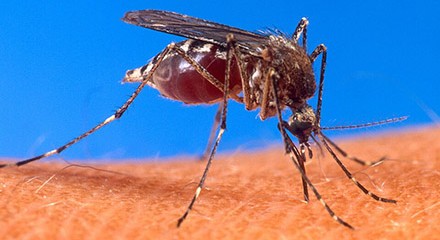
In their thousands, insects
Blood sucking flies, mosquitoes, ticks, fleas and other bugs are spreading diseases once confined to the tropics and subtropics. James Linney says the blame lies squarely with climate change and a system blinded by production for the sake of production
This year’s record-breaking temperatures have had devastating health consequences.1 But it is not only about heat strokes, heart attacks and asthma. Rising temperatures are changing the habitats and behaviour of insects that carry diseases, known as vectors. Diseases once confined to tropical and subtropical regions are thereby spreading to more temperate areas, including the UK.
Communicable diseases spread to humans in different ways: through direct contact or ingestion; through zoonotic spillover (animal-to-human) transmission, as seen in Ebola outbreaks and believed to have led to the emergence of Covid-19; or through an intermediary, as is the case with vector-borne infections.
These diseases can be caused by parasites, viruses or bacteria being transmitted by a vector - usually an insect or other organism that carries and passes the infection to humans. Common examples include mosquitoes, which spread malaria, Zika and dengue; ticks, which spread Lyme disease; and sandflies, which transmit leishmaniasis.
Vector-borne diseases currently account for more than 17% of all infectious diseases2 and have been responsible for some of the deadliest diseases in all of human history, including the bubonic plague - also known as the Black Death. This bacterial infection, caused by Yersinia pestis, is transmitted by fleas, which often live on rodents. Thankfully, the disease is now very rare, but it was believed to be responsible for the deaths of an estimated 25 million people, when it ravaged Europe between 1347 and 1351.
Vector-borne
Vector-borne infections remain a major cause of death worldwide, with mosquitoes among the deadliest disease-carriers on the planet - an estimated 700 million people contract mosquito-borne infections every year. Climate change is contributing to changes in the distribution and incidence of these diseases, with many regions experiencing significant increases.
Global warming has on the whole been devastating for insects, their numbers are declining at an estimated rate of 1% to 2.5% annually, and here in the UK by 60% in 20 years.3 But there are some, like certain species of mosquitos, that have been able to take advantage of the rising temperatures - moving from their usual home in tropical regions, where they thrive, to more northerly or higher-altitude regions, which are now seeing longer, hotter summers and milder winters.
There have always been some mosquito species able to breed in colder environments: the UK, for example, has over 30 species of native mosquitos, but most do not bite humans or carry disease. In the past decade the number of disease-carrying mosquitos has increased significantly in Europe. One such example is the Aedes aegypti mosquito, which can spread diseases such as yellow fever, dengue and chikungunya, all of which are on the rise.
Dengue fever rates, for example, have increased dramatically in the past decade. The World Health Organisation reports that cases have increased from 505,430 in 2000 to 14.6 million in 2024. The disease is now endemic in more than 100 countries and half of the world’s population is now at risk of dengue, with an estimated 100-400 million infections occurring each year (although the vast majority of cases are mild and go undiagnosed).4
The dengue virus commonly causes symptoms such as a high fever, headache, rash, vomiting and severe body aches, earning it the name, ‘breakbone fever’. Although most infections are self-limiting and do not require hospital treatment, approximately one in 20 people who develop dengue go on to suffer a more serious infection. Severe dengue can cause abdominal pain, persistent vomiting, bleeding and breathing difficulties. There is no specific antiviral treatment, so care focuses on managing symptoms, controlling pain and replacing fluids. Severe dengue can be fatal without appropriate medical treatment.
Dengue is spread by the females of the Aedes aegypti and Aedes albopictus (known as ‘Asian tiger mosquito’) species, which have now become established within Europe and are creeping further north each year. They are now established in 16 European countries. The Aedes mosquito is now common throughout the USA, and this month the UK Health Security Agency confirmed that Aedes aegypti mosquitoes and larvae have been found at residential properties for the first time. Although this does not mean they are established in the UK, it does suggest that it is only a matter of time before they are.
Established Aedes mosquito populations have not yet resulted in large outbreaks of dengue, zika or chikungunya virus in Europe. There is often a delay between mosquitoes arriving in new areas and infections beginning to spread. At present, there are still only a handful of locally acquired cases in northern Europe each year, with none confirmed yet in the UK. However, the risk of future transmission is a growing concern. In the US, 1,455 locally acquired and travel-related dengue cases have recently been reported.5 According to the Center for Disease Control and Prevention, annual cases have increased by 359% over the past decade.6
Malaria is another major mosquito-borne infection with devastating global health consequences. It is caused by parasites belonging to the Plasmodium genus and transmitted to humans by female Anopheles mosquitoes. These mosquitoes thrive in hot, humid climates, where standing water provides suitable breeding grounds. Most malaria cases have historically occurred in sub-Saharan Africa, although the disease is also found in parts of Oceania, including Papua New Guinea, as well as central and South America and south-east Asia.7
Climate change
There have been some gains in reducing malaria infections over the past decade, largely through public health prevention programmes, including initiatives to increase access to insecticide-treated mosquito nets. However, there were still an estimated 282 million cases and 610,000 deaths in 20248, compared to 233 million cases and 985,000 deaths in 2000.
Climate change threatens to reverse these gains and a combination of rising global temperatures and increasing flooding (creating more standing water breeding grounds) risks the spreading of such infections to new regions. Hot temperatures do not just allow for longer breeding periods for mosquitoes: they have been shown to increase biting rates and reduce the incubation time for infection.9 The spread of malaria to new regions threatens to burden health services doubly, because people have had no prior exposure to the infection and therefore have not acquired immunity, so there is a greater risk of severe illness and higher mortality rates.
Another vector spreading beyond its traditional geographical range as a result of global warming is the tick. Ticks can transmit Lyme disease - a bacterial infection that can initially cause flu-like symptoms. Although the disease can be treated with antibiotics when diagnosed early, some people continue to experience persistent symptoms, including severe fatigue, muscle aches and a loss of energy, which can last for years. Tick activity and Lyme disease peak when the temperature reaches 17°-20.5°C and their numbers have drastically increased in western Europe and the US in recent decades.
If vector-borne disease spreads, these trends are likely to increase in 2027 - especially with the coming El Niño, which is predicted to the be the largest in the past thousand years. El Niño is a naturally occurring cyclical weather pattern, so not caused by climate change, but climate change could amplify its effects. That means we are very likely going to see very extreme weather events in many parts of the world - droughts in some areas and heavy rainfall in others - meaning more opportunities for mosquito breeding.
El Niño also causes an increase in global temperatures, meaning that it is virtually certain that this year will see record-breaking temperatures. Flooding, hotter temperatures and wildfires, leading to displaced populations and pressure on health services, is a perfect recipe for spreading not just vector-borne, but all types of infections, including zoonotic diseases - some of which could have the potential to trigger future pandemics.
Looking further into the future, a study published in The Lancet Planetary Health estimates that as many as 8.4 billion people could be at risk of malaria and dengue by the end of the century if carbon emissions continue to rise at current rates.10 Another article, assessing the impact of climate change on malaria rates in Africa, found that we could see 123 million additional malaria cases and 532,000 additional deaths in Africa between 2024 and 2050 under current control levels.
Let me be clear: highlighting the changing patterns of vector-borne infections is not a form of so-called ‘climate doomism’: it would only be so if their spread and devastating health consequences were inevitable. This is far from the case.
Vector-borne infections such as malaria and dengue could have been eradicated decades ago. However, research into treatments and vaccines has been neglected, in part because these diseases disproportionately affect some of the poorest regions of Asia, Africa and the global south, where imperialism has historically placed less value on human life.
Diseases such as malaria, dengue and Zika have attracted relatively little interest from major pharmaceutical companies. Why invest in expensive and risky research into vaccines and treatment, when the potential financial returns are limited? The progress we have made in preventing and treating infectious diseases globally has been achieved despite capitalism, not because of it.
The emerging spread of mosquitoes and the infections they carry into Europe and the UK does not mean that we are facing immediate catastrophe. However, it is another major warning sign that we have very little time to waste.
Here in the UK, public health services need adequate funding and staffing to monitor, prevent and manage the consequences of these emerging infections. Without sufficient resources, the eventual arrival of diseases such as dengue and malaria would place enormous additional pressure on the NHS, which is already struggling to keep going.
Prevention
However, preventing this potential crisis requires more than simply strengthening healthcare services. Climate science has repeatedly warned us that, without decisive action, the future looks increasingly bleak. But we cannot simply science our way out of this crisis: we need a political solution: an end to the social system that got us into this mess.
It is the relentless drive to accumulate profit and constantly create new markets that has contributed to the destruction of wildlife, the loss of natural habitats and widespread deforestation, while, at the same time, capitalism continues to depend heavily on the burning of fossil fuels. Despite repeated pledges by world leaders to reduce carbon emissions, the march towards climate catastrophe continues.
The working class has within its capabilities the collective power to achieve what is needed: the overthrow of capitalism in favour of a system based on need, not profit. But that requires the mass acceptance of what is needed - and the political organisation necessary to achieve it. Time is of the essence.
-
See my ‘Heatwaves and excess deaths’ Weekly Worker May 27: weeklyworker.co.uk/worker/1598/heatwaves-and-excess-deaths.↩︎
-
www.who.int/news-room/fact-sheets/detail/vector-borne-diseases.↩︎
-
www.nhm.ac.uk/discover/news/2022/may/uks-flying-insects-have-declined-60-in-20-years.html.↩︎
-
www.who.int/news-room/fact-sheets/detail/dengue-and-severe-dengue.↩︎
-
www.independent.co.uk/news/world/americas/mosquito-dengue-virus-us-states-florida-virginia-b3028742.html.↩︎
-
www.aha.org/news/headline/2026-05-15-report-finds-359-rise-us-cases-dengue.↩︎
-
www.who.int/teams/global-malaria-programme/reports/world-malaria-report-2025.↩︎
-
www.lshtm.ac.uk/newsevents/news/2021/malaria-and-dengue-predicted-affect-billions-more-people-if-global-warming.↩︎