
17.09.2026
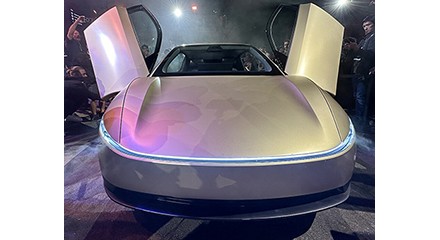
When cybercabs kill
Pilot tests are already ongoing and commercially available, fully autonomous vehicles are expected on UK roads by the second half of 2027. But what happens when there is a crash, when someone dies? Legal rules will protect the capitalists, suggests Mike Macnair
On September 11 the US tech magazine, Futurism, published an entertaining story under the headline, ‘Lawyers already lining up to defend victims of cybercab crashes’. The story is actually about US law-firm blogs raising the question, who is legally responsible if a driverless taxi operated by an AI system causes an accident?
The article comments that “the tailor-made cybercab blogs follow a familiar pattern of opportunism by corporate law firms, their point is fair enough. The technology behind cybercabs is in a very early stage, and the legal precedent is even younger.”1 In reality, the second of these points is nonsense. But the nonsense is revealing.
Cybercabs - autonomous driverless cars - are machines, which will be put on the public highway by their owners, who will be paid for their hire. Hence, owners will be just as much responsible for them as the owners of the young horses taken for training to Little Lincoln’s Inn Fields (now New Square, Lincoln’s Inn, central London) were responsible for the damage caused when they lost control of the horses in the 1676 case of Mitchell v Allestry.2
The general principle of most laws, though reached by varying routes, is that users of the public highways are legally liable for injury or damage to property caused by driving which objectively does not meet the standard of a reasonably competent driver. Objectively is important: in England it was established in Nettleship v Weston in 1971 that a learner driver is held to the same standard as an experienced driver.3
A cybercab does not need to be human - or conscious - to fail to meet the objective standard of a reasonably competent driver.
English and American laws express the rule as being that the driver owes a duty of care to other road users. This is in contrast with French, German and other laws, which simply make the vehicle user liable for fault. The original purpose of this requirement of a duty was, in Winterbottom v Wright (1842), to protect the manufacturer of the vehicle from liability to the driver for injury in an accident caused by a defective vehicle.4 The manufacturer has been held to have a duty of care since, in Britain, Donoghue v Stevenson in 1932.5
Various US state jurisdictions, and the European Union, have created stricter ‘product liability’ regimes designed to secure that someone - the seller, the importer, the manufacturer - is liable to end-users who are injured (in the UK, the Consumer Protection Act 1987: EU law in origin, but retained after Brexit).
The courts have not really had much difficulty in working out causation in cases where the cause of a road accident may be design defects in the vehicle, and may be bad maintenance or bad driving by the user. An example from 45 years ago is Lambert v Lewis (1981) where a road accident was partly caused by bad design of a trailer coupling, and partly by careless maintenance by the owner of the trailer.6
In short, in the absence of manufacturers’ lobbying legislatures, and of paying high fees to lawyers for special treatment, the problem of cybercabs is neither a new legal one, nor particularly difficult. The history, however, tells us that we should expect heavy lobbying from manufacturers and operators and a range of obfuscatory arguments from lawyers designed to persuade the courts, and the rest of us, that manufacturers and operators are not, or should not be, liable.
Bending
Driver and vehicle manufacturer interests have repeatedly succeeded in getting the law bent in their favour.
A possible early example is that between the 1670s (when our sources for the practice begin) and 1750, drivers who caused fatal traffic accidents were routinely prosecuted for murder. They were never convicted of murder, but more often of involuntary manslaughter or of ‘chance-medley’ (a now obsolete crime of negligent killing). In 1750 the practice abruptly ended, and by 1774 it seems to have been forgotten.7 Why did it end? There is a striking coincidence with the 1750 ‘Newmarket Carriage Match’, in which gentry bet on whether a carriage could reach 19 mph on Newmarket Heath: a particularly famous instance of gentry sport-carriage road-racing, reflecting both improved roads and improved carriage designs.8 The prosecution of gentleman road-racers for murder (even if there was no real chance of conviction) would be class-inappropriate, unlike the carters and cabbies affected by the older practice.
This principle of protecting wealthy road-racers has descended into modern times with the disappearance of manslaughter prosecutions for homicide by bad driving after Andrews v DPP (1937),9 with parliament instead creating offences of “causing death by dangerous driving” and more recently “causing death by careless driving”.
I have already referred to Winterbottom v Wright (1842) protecting the coach-builder, until its doctrine was finally overthrown. Roughly contemporary with it is Cotterill v Starkey in 1839, where the defendant, driving his light carriage (allegedly on the wrong side of the road), ran over and seriously injured the claimant. Mr Justice Patteson, directing the jury, said:
A foot passenger has a right to cross a highway, and I believe that it was held in one case that a foot passenger has a right to walk along the carriage way; but without going to that length, it is quite clear that a foot passenger has a right to cross, and that persons driving carriages along the road are liable if they do not take care so as to avoid driving against the foot passengers who are crossing the road; and if a person driving along the road cannot pull up because his reins break, that will be no ground of defence, as he is bound to have proper tackle. With respect to what has been said as to the defendant being on his wrong side of the road, I think you should lay it out of your consideration, as the rule as to the proper side of the road does not apply with respect to foot passengers; and as regards the foot passengers, the carriages may go on whichever side of the road they may please.10
This direction was favourable to the claimant in the specific case, who won a verdict, but also rather favourable to drivers as a general rule: pedestrians have only a right to cross the road, not to use it, and driving on the wrong side of the road does not affect the driver who runs down a pedestrian …
Similar reasoning was deployed by the motor industry in lobbying for drivers’ rights in American cities, resulting in the invention of a crime of ‘jaywalking’ - crossing the road other than at a regulated pedestrian crossing - to deny pedestrians the right to use the streets. The development has been studied in depth by Peter D Norton in his 2008 book, Fighting traffic: the dawn of the motor age in the American city - a careful study of advertising and lobbying operations, and how safety concerns can be turned against the victims by news management.
Spin coming
We should, therefore, expect a mass of spin - in legal argument and in other forms of lobbying and news management - in favour of the idea that cybercabs pose new and difficult legal questions, and in particular that AIs should be treated as autonomous actors, so that the proprietor of the vehicle and the manufacturers of the hardware and software should not be liable for accidents that result from their use.
Do not be fooled! In the first place, animals are also autonomous actors: but their owners who take large animals into public spaces are liable for any damage they cause, as in Mitchell v Allestry (and centuries before, in the Roman law of ‘noxal liability’ for damage caused by animals11).
Secondly, as Cory Doctorow has recently argued,12 we should not treat large language models which ‘escape’ and hack other people’s sites as autonomous actors; rather, the LLMs are designed as malware and trained on corpuses of hacker material. They have this character because it is in the interests of the US state to create very high-powered malware.
Similar issues arise in relation to driverless vehicles. In a real great-power war, as opposed to colonial and proxy wars, the sharp end of the arms industry needs to be backed up by massive industrial conversion – turning, for example, car manufacturers into producers of tank and aircraft parts, and so on, as in World War II. That military necessity means that, as long as the tanks/aircraft/trucks military model continues, the car industry needs to be kept alive.
But the same is true in relation to AI. Republican Senator Ted Cruz recently remarked: “If they’re going to be killer robots, I’d rather they be American killer robots and not Chinese killer robots.”13 To have the production capacity for “American killer robots” available (and insufficient US production capacity has recently been visibly a problem with missiles and drones), there is a need for massive adoption of the tech; and if it can be used as an excuse to evade liability for accidents, so much the better.
The lawyer bloggers (and there is also a good deal of more elaborate work on academia.edu) are probably not being directly paid by big tech, or the US government, to obfuscate the liability issue. Rather, it is inherently in the interest of lawyers as a group that the law should be complicated, and finer and finer distinctions made: as Futurism says, “a familiar pattern of opportunism by corporate law firms”.
What we have seen here is two patterns. One, in 18th-19th century England, is the courts making decisions behind the backs of the public for the benefit of the upper classes. The second, in early 20th century USA in Norton’s discussion, is complex manoeuvres combining lobbying operations and news management to shift the law in the interests of car manufacturers and their driver customers.
The consequence of these manoeuvres, as Winfried Wolf argued in 1996 in Car mania, is a profoundly dehumanising ‘car society’. Making the streets and roads legally safe for driverless cars will be even worse.
The capitalists get what they want (or some approximation thereto) by corruption, in the form of party-political donations, advertising subsidies to pro-capitalist media, payments to professional lobbyists and spin doctors, and the ‘free market’ in legal services. These payments allow them to conceal what they are up to and to persist in manoeuvres towards their ends. Their opponents suffer from short attention spans, passing from today’s fashionable campaign to tomorrow’s, and failing to pay close attention to what is going on either in the legislature or in the courts (until the capitalist media picks it up for them).
To counter these tactics what is needed is workers’ media and a communist political party which can pay attention - and desist from being distracted.
The US Marxist Unity Group’s Light and Air has recently launched a good initiative: a quarterly analysis of the progress of legislation through Congress.14 Britain lacks any equivalent, in spite of the significant size of left groups and the significant number of leftwing lawyers. Neither the USA nor Britain has any leftwing lawyers tracking what the courts get up to when no-one is looking carefully.
To free up the resource to do these jobs, and thereby be able to keep paying attention, we need to unify our forces on a principled basis, with a view to political action, rather than merely to tail-ending what happens to be currently fashionable.
-
futurism.com/advanced-transport/lawyers-lining-up-cybercab-accidents.↩︎
-
J Baker Baker and Milsom: sources of English legal history Oxford 2010, pp630-33.↩︎
-
[1971] 2 QB 691.↩︎
-
(1842) 10 M&W 109, 152 ER 402.↩︎
-
[1932] AC 562.↩︎
-
[1982] AC 225.↩︎
-
M Macnair Torts displaced by crimes in the early 18th century (Selden Society lecture 2020) pp3-4 (publication forthcoming).↩︎
-
M Huggins, ‘Racing culture, betting, and sporting protomodernity: the 1750 Newmarket carriage match’ Journal of Sport History vol 42 (2015), pp322-39; see also D Brailsford, ‘Religion and sport in 18th century England’ International Journal of the History of Sport vol 1 (1984), p173.↩︎
-
Andrews v DPP [1937] AC 576.↩︎
-
Cotterill v Starkey (1839) 8 C & P 691, 173 ER 676, at p694/677.↩︎
-
A recent discussion is contained in P Klausberger, ‘Actio de pauperie: damages caused by domestic animals’: www.researchgate.net/publication/398786253_Actio_de_pauperie_damages_caused_by_domestic_animals.↩︎
-
‘LLMs are real, AI is fake’ (September 12): pluralistic.net/2026/09/12/god-in-the-box.↩︎
-
‘Trump dismisses fears over AI as Ted Cruz says he’d prefer “US killer robots” to Chinese ones’ The Independent September 11.↩︎
-
www.marxistunity.com/the-state-of-the-union-congressional-legislation-june-august-2026.↩︎