
23.07.2026
Deadlock and danger of escalation
American air superiority is overwhelming, but it cannot stop retaliation or open the Strait of Hormuz. Meanwhile, civilian targets are increasingly being hit, warns Yassamine Mather
Since the fragile US-Iran ceasefire broke down in early July, the United States has conducted consecutive nights of military strikes across Iran. The campaign has concentrated on missile and drone launch sites, command centres, naval infrastructure, coastal surveillance, transport routes and facilities linked to Iran’s ability to contest navigation through the Strait of Hormuz. In response, Iran continues to launch missiles and drones at US bases situated in the region and commercial shipping. The central strategic fact is not American air superiority, which is clear, but the failure of air power alone to eliminate Iran’s capacity for retaliation or compel it to give up its leverage over the strait.
Iranian attacks have continued to penetrate regional air defences often enough to produce casualties and disruption. Publicly reported figures place the cumulative US military toll at 18 dead and more than 500 wounded, although casualty reporting has been gradual and remains politically contested. The significance lies less in any single number than in Iran’s ability to impose a steady cost despite overwhelming US technological superiority. On the Iranian side, casualty totals remain disputed and have been reported differently by Iranian authorities, rights monitors and international agencies. However, we know that at least 3,500 Iranians - many of them civilians - have been killed and more than 27,000 injured. The UN High Commissioner for Refugees said in March that up to 3.2 million people had been displaced inside Iran since the conflict began.
The most important development in the renewed campaign is the widening of attacks from clearly military installations to infrastructure with both military and civilian functions. This creates cascading effects: damage to a bridge can interrupt food, fuel and medical deliveries; damage to electricity generation or substations can halt pumps and water treatment; damage to ports and railways can paralyse both military logistics and ordinary commerce.
Strikes in Hormozgan province reportedly hit road and railway bridges around routes which connect Iran’s principal southern port and naval facilities to the central plateau and Tehran itself. Even when described as military-logistics targets, their destruction also slows civilian freight, food distribution, fuel deliveries and emergency access.
Iran’s energy ministry has acknowledged damage to power infrastructure, including generating units, transmission lines and substations, causing blackouts beyond the immediate strike zone. Electricity and water systems are interdependent: pumps, treatment works, desalination units and distribution networks require continuous power, meaning that a strike on electrical infrastructure can therefore become a water crisis, even when the water facility itself is not directly hit. In temperatures above 45°C, interrupted water and electricity supplies carry immediate health risks, particularly for children, older people and those unable to leave.
Earlier in the war, Iran accused the US of hitting a desalination plant on Qeshm Island, allegedly cutting supplies to 30 villages. Washington did not acknowledge that strike, so the attribution remains disputed. Nevertheless, the episode demonstrates the extreme vulnerability of coastal communities that rely on desalination and electrically powered distribution.
The broader consequence is cumulative rather than local. Southern Iran already faced heat stress, water scarcity, electricity shortages and ageing networks before the war. Repeated damage, shortages of spare parts and sanctions on equipment can turn a repairable outage into a prolonged breakdown. Hospitals, refrigeration, sewage systems, telecommunications and small businesses are then affected, even when they are not directly targeted.
Destruction
The war has damaged major steel and petrochemical installations, which depend on reliable electricity, natural gas, water, rail transport and port access. Damage to any one of these systems can keep production offline after the physical plant itself is repaired. Steel and petrochemicals are also major non-oil sources of foreign currency, so their disruption deepens the pressure created by sanctions and the naval blockade.
One estimate suggested that roughly 10 million tonnes of annual steelmaking capacity, or about 25% to 30% of Iran’s total, had been knocked offline after the attacks, but the precise figure remains hard to verify. What is not in doubt is that two of Iran’s largest producers were struck and that production at major sites was at least temporarily halted.
Iran said the under-construction Darkhovin nuclear power project in Khuzestan was attacked. The International Atomic Energy Agency stated that the site was at an early stage, contained no nuclear material when last inspected and was not believed to pose a radiological risk. However, damage to nuclear-related sites still carries political and environmental risks, even when no radioactive release occurs. It can also affect surrounding electricity, transport and industrial infrastructure and further narrow the space for diplomacy.
There has been some speculation in the region that the southern strikes indicate preparations for a ground invasion. A more cautious reading is that the concentration of strikes around Bandar Abbas, Chabahar, Sirik, Qeshm and the Hormuz coastline is primarily connected to the contest over the Strait of Hormuz.
The immediate objectives appear to include:
- destroying mobile missile and drone launchers;
- suppressing naval, surveillance and coastal defence units;
- cutting military supply routes to ports and bases;
- protecting or restoring commercial shipping;
- creating bargaining leverage; and
- preparing potential options for limited raids, island seizures or perations against coastal positions.
Preparing the battlefield is not the same as preparing a full-scale invasion. The same air campaign could support continued bombing, naval escorts, special-forces raids, seizure of a small island or a limited exclusion zone. A conventional invasion intended to occupy Bandar Abbas, control the Hormuz coast or advance inland would require a much larger mobilisation: army and marine formations, amphibious shipping, engineering and logistics units, field hospitals, extensive fuel and ammunition stocks, and sustained access through Gulf states.
A limited landing or commando operation is more plausible than an attempt to occupy southern Iran. Even so, a supposedly limited action could expand quickly if US forces suffered heavy casualties or if Iran retaliated against regional bases and infrastructure.
Regional impact
On July 20, Yemen’s Iran-aligned Houthi movement announced a maritime embargo against Saudi Arabia, saying it was retaliating for the long Saudi blockade of Yemen and more immediate aviation and airport disputes. The declaration threatens to widen the conflict from the Strait of Hormuz to the Bab al-Mandeb strait and Red Sea, creating pressure on two major maritime chokepoints at once. The practical effectiveness of the announced blockade remains to be tested, but it increases insurance costs, military risk and uncertainty for Saudi exports and global shipping.
It looks as if the war has reached a strategic deadlock. The United States can destroy fixed targets and impose extensive economic and infrastructural damage, but it has not forced Iran to relinquish control of the strait or stop retaliating. Iran cannot defeat the US conventionally, but it can impose casualties, disrupt shipping, raise energy prices and expand the conflict to US bases and allied states.
Diplomatic contacts through Pakistan and other intermediaries continue. This indicates that neither side has completely abandoned a negotiated exit, even while both attempt to improve their bargaining position through force. The most probable near-term course is therefore continued US intensive bombing, Iranian retaliation and confrontation over Hormuz, punctuated by intermittent ceasefire efforts.
The most dangerous signs of further escalation would be:
- deployment of additional US ground-combat brigades or marine expeditionary forces;
- a concentration of amphibious vessels near Oman and the Strait of Hormuz;
- large civilian evacuation orders around southern Iranian ports;
- attacks designed to cause prolonged national power or water failure; and
- a shift in US language from reopening the strait to occupying, administering or permanently controlling Iranian territory.
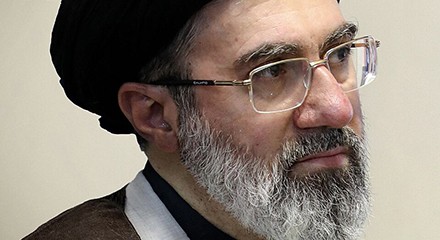
Meanwhile, more than four months after his appointment, supreme leader Mojtaba Khamenei has still not made a verified public appearance. Statements and letters attributed to him have circulated through official channels, but the absence of any live image, voice or independently verifiable appearance has fuelled speculation about his health, authority and even whether he is alive. Iranian officials attribute the secrecy to wartime security, and president Masoud Pezeshkian has said he met him in person. The available evidence does not permit a firm conclusion.
Hardline cleric Mohammad Mehdi Mirbaqeri attracted attention by comparing the leader’s disappearance from public view to the religious concept of ‘occultation’. The analogy is politically revealing, but theologically weak. In Twelver Shiism, the occultation of the Twelfth Imam is understood as divinely ordained and tied to an infallible figure. But, of course, Khamenei is a constitutional and political office-holder whose authority formally derives from the Assembly of Experts and the institutions of the Islamic Republic, not divine appointment.
The rhetoric of occultation may nevertheless serve a political purpose: the system treats keeping secrets like a sacred duty, so asking for proof or evidence is discouraged and allows power to be exercised through an opaque network of offices, clerics and security institutions without a visible leader. His absence therefore matters not only as a question of personal health but as a sign of the regime’s increasingly concealed and collective mode of rule under wartime conditions.
Iranian left
The analysis of the character of the war, and of responses to the ongoing destruction and devastation, has exposed significant divisions within the Iranian left.
On one side are sections of the reformist left that have returned to a post-1979 position of near-unqualified support for the Islamic Republic. They treat the regime’s survival as a political achievement and reproduce the language of international commentators, such as John Mearsheimer and Jeffrey Sachs, who present the conflict as an Iranian ‘victory’. Some endorse negotiations; others combine support for talks with support for the continuation of the war. Among the more militant elements, there is a genuine belief that Iran can prevail militarily and assume a leading role in the global south - whether in alignment with China or as one of its principal regional partners.
At the other end of the spectrum, sections of what presents itself as the ‘radical left’ have produced an equally unsatisfactory line of argument. In this view, the conflict is not a war of aggression waged by an imperialist power - to identify it as such is allegedly to demonstrate support for the Islamic Republic. This framework collapses the distinction between the aggressor state and the state under attack.
A related position holds that the US, Israel and Iran are equally culpable for the war. Although this argument is most visible in certain exile circles, it also finds support among social-imperialist currents, especially those that adopt a conciliatory posture towards Israel. Taken to its conclusion, this logic would imply that support for the Palestinian struggle is suspect, because some Palestinians support Islamist organisations. In the name of ideological purity, such reasoning can therefore become accommodating towards another reactionary state in the region: the Zionist state of Israel.
The reality is more straightforward. This is a war of aggression, and its implications extend well beyond Iran. It forms part of the wider confrontation between the US and China. The left cannot afford to retreat into historically thin, politically evasive or factually incoherent commentary if it wants to retain any credibility.
Fortunately, the more extreme versions of these positions remain largely confined to small exile groups. Years of splitting and fragmentation have reduced many of them to marginal organisations with only limited support. Nonetheless, the public endorsements they receive from figures associated with the Alliance for Workers’ Liberty, as well as from Labour politicians such as John McDonnell, can create a misleading impression of their political weight.
It is entirely possible to describe this war as an act of imperialist aggression without thereby endorsing the Islamic Republic. The correct position is to recognise that even a reactionary capitalist state has the right to resist military attack by Israel and the US, while creating no political or strategic illusions about that state itself.
Defence of the Iranian and Palestinian peoples requires mass mobilisation - not only against foreign aggression, but also against nationalist and religious forces within their own societies. In the final analysis, such forces either accommodate imperialism or pursue a catastrophic strategy of ‘victory’ at all costs, while in reality supporting regimes whose corruption, inequality and repression generate the very social discontent that helps to destabilise them.