
30.04.2026
Caught in the crossfire
So far the Kurds have refused to be used against Iran. Syria remains divided and highly unstable. Meanwhile, tensions between Turkey and Israel mount. Esen Uslu explores the web of contradictions
When Israel and the US initiated their attack on Iran on February 28, they made it clear that they were prepared to use all available options to achieve the aim of quickly and efficiently bringing the Tehran regime to its knees (and, in the case of Israel, fragmenting the country into a series of docile failed states).
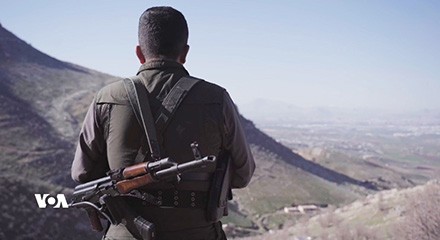
One of the available options, which seemed primed to go, was the Kurds. Given their long history of rebellion against successive Iranian regimes and their armed presence in the mountainous Kurdish region of north-eastern Iraq, they seemed a ready source of cannon fodder just wating for the US-Israeli green light.
Preparations were underway before the shooting war started. Five Iranian Kurdish political organisations - the Kurdistan Democratic Party of Iran, Organisation of the Toilers of Kurdistan (Komala-Reform Faction), Organisation of Iranian Kurdistan Struggle (Khabat), Kurdish Freedom Party (PAK) and the Free Life Party of Kurdistan (PJAK). Together they formed the Coalition of Political Forces of Iranian Kurdistan in February 2026. Shortly afterwards, the Komala Party of Iranian Kurdistan (KŞZK) joined, although the Komala Kurdistan Organisation of the Communist Party of Iran (Komala-CPI) declined. However, Komala-CPI did not oppose the formation of a joint guerrilla force.
All these organisations aim to topple the Tehran regime and have military units of various sizes and effectiveness available. Basically, their stated programme is to liberate eastern Kurdistan (ie, Iranian Kurdistan) by leading a popular uprising to establish a democratic and secular state. Several attempts to unify their units have been made in recent years, but all proved unsuccessful or short-lived.
At the start of the shooting war, it was claimed that US-Israeli clandestine support had changed things. The US even boasted of having used them as conduits to arm Iranian opposition forces. Fox News quoted Donald Trump saying “We sent guns to the protestors - a lot of them”. However, it added that the US president believed that the Kurds “had kept the guns for themselves.”1 However, the organisations themselves denied the claim and insisted that they had received no military hardware from the US.
The Trump administration’s inconsistent messages added to the confusion. On the sixth day of the US-Israeli war, Trump said: “An assault by Iranian Kurds based in Iraq would be wonderful.” But two days later he stated: “We are not looking to the Kurds going in. I’ve ruled that out.” On the first day of the shooting war, Benjamin Netanyahu had called on Iranians to revolt, saying: “Citizens of Iran: Persians, Kurds, Azeris, Abkhazians, and Baluchis. This is your time to join forces, overthrow the regime, and secure your future.”
However, the Iraqi Kurdistan regional government stated clearly that it had no intention of being drawn into the war: “Under no circumstances will the territory of the Kurdistan region be permitted to be used as a staging ground for attacks, threats or hostile actions against any neighbouring countries.”2
Despite that categorical assurance, Tehran turned the screws on Kurdish opposition forces, launching deadly drone strikes on their bases. Iranian-backed militias in Iraq were also mobilised. Kurdish forces suffered a good number of casualties. Sending a further blunt political message, Iran even targeted the residences of regional president Nechirvan Barzani in Dohuk and former president Masoud Barzani in Erbil.
While a substantial number of US and Israeli airstrikes took place in Iranian Kurdistan, no substantial action was taken by Iranian Kurdish guerrilla forces up to the April 8 ceasefire.
Turkey and Israel
While the centre of gravity of the military action appeared to be on both sides of the Iran-Iraq border, the Kurdish freedom movement, which also operates in Turkey and Syria, found itself in a precarious situation. The outbreak of hostilities between US-Israel and Iran came at an inopportune moment. After all, the Kurdish Worker Party has already committed to the peace process with the Turkish government. Having said farewell to armed struggle, it had been taking steps to disarm and withdraw from contact zones with the Turkish army.
In Syria, the Kurdish movement lost the positions in the north it had established by working painstakingly within the Syrian Democratic Forces for years. Arab militias succumbed to pressure and quit the alliance. Kurdish forces undertook a forced withdrawal to their core strongholds under relentless assault from the forces of the new Syrian regime under Ahmed al-Sharaa. Meanwhile their supposed backer, the US, abandoned them. On the brink of annihilation, they made a last-minute peace deal with Damascus in a desperate attempt to survive.
The terms of the deal remain unclear, but, under pressure from Tom Barrack, the US special envoy, a compromise was reached. US forces left their bases in Syria and withdrew to Iraqi Kurdistan, leaving their bases to the new Syrian army. However, showing its fundamental weakness, the al-Sharaa regime is unable to do anything about the ‘temporary’ Israeli occupation zone extending beyond the already annexed and colonised Golan Heights. Nor is Damascus in any position to counter Israel’s protection granted to the Druze population in the southernmost Suwayda province.
The main tool in the US-Israeli strategy of establishing a new Syrian regime from the diverse Islamist militias was Turkey. Turkey is still al-Sharaa’s main prop. But Israel does not want strong or stable regional neighbours: not in Lebanon, not in Gaza, not on the West Bank, not in Syria ... and, crucially, not in Iran.
Hence while Turkey and the al-Sharaa regime were exploring the possibility of using four bases of the former Syrian Arab Army for the New Syrian Army, Israel promptly bombed each of them in August 2025 destroying military equipment and putting them beyond use.
As Turkey and Israel have come into conflict over Syria, the deconfliction arrangements made during the last years of the Ba’ath regime have become redundant. Indeed the conflict between Israel and Turkey extends beyond the Middle East.
There is, for example, the Horn of Africa. Israel was the first to recognise Somaliland, which has unilaterally declared independence from Somalia, while Turkey has a large training base for the Somalian army in Mogadishu. Turkey is also building a naval base in Somalia. Turkish army schools are being used to train Somalian army officers and NCOs. In response to Israel’s deployment of troops in Somaliland, Turkey has moved some older, but effective, tanks and armoured vehicles to bolster its defences. This contest could affect the Bab al-Mandeb straits if it escalates into a wider conflict.
The new circumstances are evident in the virulent anti-Turkish rhetoric of Israel. The press supporting the Israeli government is full of articles criticising Turkey’s treatment of the Kurds, its neo-Ottomanist, expansionist ambitions in the Middle East and Africa, and its support for Islamist resistance movements, such as Hamas and Hezbollah. The Israeli press also claims that Turkey is secretly preparing for war with Israel.
In a tit-for-tat move, Turkey’s National Intelligence Organisation (MIT) caught several Mossad cells operating in Turkey red-handed. That despite Turkey and Israel having once been allies. Turkey has insulted Netanyahu by describing him as the “Hitler of our era” and Israel as “baby killers”. Turkish airspace is closed to Israeli aircraft, meaning that flights to Russia and Azerbaijan must take a circuitous route around Turkey. Considering the rising aviation fuel prices and longer journey times, this is a considerable inconvenience for Israel. Turkey has imposed a trade embargo on Turkish goods exported to Israel, but hypocritically turns a blind eye to banned goods being re-exported to Israel via third countries. Meanwhile, the Baku-Tbilisi-Ceyhan pipeline continues to carry Azerbaijani oil destined for Israel, accounting for nearly 50% of its oil consumption.
New realities
The US bad mouthing its Nato allies, while supporting Israel through thick and thin, brings in a new era. While EU countries wobble and waver, they also find themselves on shaky ground in many respects. For example, EU commission president, Ursula von der Leyen, recently remarked: “We must succeed in uniting Europe, so that it does not fall under the influence of Russia, Turkey or China. We must think big and more geopolitically.” EU diplomats quickly attempted to repair the damage, but to no avail. Once again, the Eurocentric view of Turkey has become apparent.
Just a couple of months ago, a sizeable Turkish contingent participated in Nato’s annual maritime exercise in the Baltic, during which Turkish ships took part in the exercise following a 10-day voyage from the Aegean Sea - demonstrating their preparedness for crisis response. For the first time during the exercise, Turkish drones were deployed from a helicopter carrier and participated in an eight-hour mission alongside Nato aircraft. Turkish participation was highly praised.
However, in the current climate, with the Kurds under fire and Turkey facing an increasingly belligerent Israel, it is difficult to envisage a clear path through the frozen conflict between Iran and US-Israeli forces. The efforts of leftwing groups seem insignificant, compared to the forces mobilised, but the task is clear: we must cut through the fog of frozen war and continue to call for peace in the face of unabated aggression.
As the old saying goes, the main enemy is at home.