23.04.2026
Matters of perception
Negotiations have not happened, the Strait of Hormuz remains closed and yet the ceasefire continues. Pushing the line that Iran has won is, though, not only factually wrong. It is dangerous, warns Yassamine Mather
On April 21, Donald Trump announced that the ceasefire in the war against Iran would remain in place for the time being. In a war where propaganda and perceptions play a vital role, both sides claimed the other was weakening.
Iran argued that its refusal to attend the second round of talks in Islamabad and negotiate under pressure had forced the US to back down. The US, by contrast, argued that Iran’s absence showed desperation, claiming the blockade was pushing Iran towards economic collapse and that American military pressure had already badly weakened it. Iran may have won in terms of optics and short-term propaganda by refusing to surrender, but the country is still operating from a much weaker long-term economic and military position, as I explained in my article last week.1
A consensus has emerged among both leftwing commentators and large segments of the liberal, centre-left media that Iran has, thus far, emerged as the victor of this conflict. However, there are inherent dangers in making such an assertion.
First, this narrative could be leveraged by the US and Israel to justify further, more aggressive military action. Second, characterising the current situation as a ‘victory’ is absurd. While the stubborn resistance of the Iranian government is notable, the country’s infrastructure lies in ruins: factories, bridges, hospitals and universities have been systematically destroyed. Speculation suggests that upwards of 15 million jobs have been lost due to the bombing campaigns. Consequently, despite its public posturing, the Iranian leadership is desperate for the ceasefire to hold. Meanwhile, Washington faces growing frustration: with the Strait of Hormuz closed and calls for ‘regime change’ exposed as empty rhetoric, the war is becoming increasingly unpopular, as domestic oil prices soar. The US president now finds himself under immense pressure, both internally and internationally.
Hence, much of what Trump is saying - regarding the blockade of Iranian ports and the future of negotiations - should be understood in the context of its global impact. Many economists are even suggesting that, given the current situation, it is surprising that the price of oil is not higher and markets have not dropped lower.
Therefore, both sides had good reasons to maintain the ceasefire; however, achieving a successful conclusion to negotiations between the US and Iran is far less likely. Following the failure of the first round of negotiations, JD Vance, the US vice-president, claimed that the talks failed because Iran “wants nuclear weapons”. This is clearly untrue, and the Iranian delegation has responded extensively, stating: “Yes, we have enriched uranium, and the [International Atomic Energy Agency] knows this. Yes, higher enrichment levels make it easier to build a bomb, but we are not pursuing that path.” Iran has also indicated its willingness to discuss a pause in the enrichment of uranium. As far as I can tell, Iran is proposing a shorter time frame for this - perhaps five years - while the US is asking for a 20-year pause. Clearly, a wide gap exists between the two sides.
There are also proposals regarding enriched uranium. One idea is to move Iran’s stockpile to a third country - a concept that was discussed before the war. However, there are no easy or simple solutions due to the risks involved. Iran had proposed sending its stockpile to a friendly country; however, the US does not agree with the country Iran has in mind, and negotiators have yet to find a solution.
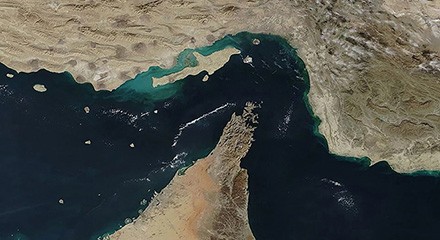
Regarding shipping and the Strait of Hormuz, before the US/Israel-Iran war, an average of 120 ships passed through this waterway every day. During the ceasefire, that number remains very low. On average, only 12 ships have passed through the Strait of Hormuz daily, and this has affected not just the price of oil, but many other commodities, including fertilisers, helium, etc - all this affecting the price of food, computers, mobile phones ...
Politically, one thing we can say is that Israel is not fully in control at the moment. In the US, even among Republicans, there are questions about whether they have relied too much on Benjamin Netanyahu and whether entering the war was wise. It is also clear that the US pushed Israel toward talks with Lebanon and enforced the ceasefire. In this respect, the dynamic in US-Israeli relations is changing.
Internal policy
Inside Iran, the government is encouraging the perception that Iran has ‘won the war’; however, many point out the dangers of such perceptions. There is a concern that an overestimation of the country’s position might lead to a situation similar to the Khorramshahr victory during the Iran-Iraq War. After Iran recaptured the city, there was an opportunity to end the war, but the regime decided to continue it, and this led to a much worse outcome later. There is a risk of repeating that mistake.
Despite what is often said in the west, there appears to be considerable unity within the factions of the Iranian regime. The foreign minister seems to have significant influence, even if others are more visible publicly. There is also speculation in academic circles about a new, more pragmatic younger generation within the Islamic Revolutionary Guard Corps leadership. Some argue this is evident in diplomatic initiatives, such as direct talks in Pakistan. However, much of this is speculative or even wishful thinking.
When it comes to continuing the war, one important constraint is public exhaustion. The level of internal support the government has received may not last indefinitely. The economic situation is getting worse daily. According to UN-linked reports, by mid-March an estimated 600,000 to one million households (up to 3.2 million people) had been temporarily displaced inside Iran, with many leaving Tehran and other major cities for northern provinces and rural areas.
The government has opened public shelters and offered alternative accommodation for people leaving urban areas or whose homes were destroyed or badly damaged (families, informal networks and people’s own resources play a significant role, so we are not dealing with a fully developed national shelter system). The government is providing food rations, mainly through its electronic coupon programme,2 aimed at lower-income households rather than the whole population. Recent official and semi-official reporting says the programme has been funded in phases for those on the lowest income, and for households covered by support bodies like the Imam Khomeini Relief Committee and the State Welfare Organisation.
In March and early April, amid Israeli and American strikes on military and infrastructure targets, high-ranking officials issued formal calls for citizens to maintain a “crushing presence” in the streets. There are two aspects to these calls. Critics accuse the government of using civilians as human shields. As far as the supporters of the Islamic Republic are concerned, this presence is evidence of nationalist fervour and therefore enhances the legitimacy of the regime - projecting an image of national unity and popular support to the world, thus countering the narrative of internal collapse.
Left tactics
Within the Iranian left, there are new debates about tactics. As expected, many outside Iran had called for the formation of workers’ councils or ‘soviets’; others inside Iran have commented on the limitations of such proposals. On the website Naghd-e Eghtesad Siasi, one article asks how can we expect citizens to build ‘councils’ during wartime, when everyday life and social connections are deeply disrupted. It begins with a critic of a widely shared call on social media encouraging people to form local councils (in neighbourhoods, workplaces, etc). The author argues that, while this idea reflects a real and important need, it overlooks the harsh realities of war.
The article’s central claim is that, although solidarity is essential in times of crisis, it cannot simply be created through large, formal structures (like councils). Instead, it must emerge from existing, small-scale social relationships and everyday acts of care, adding that war destroys not only physical, but also social infrastructure - schools, workplaces, public spaces and communication networks. Internet disruptions and the displacement of people all weaken communication. Urban life already lacks strong neighbourhood ties, and many people are also distant from family networks.
Because of this, calls for organised, large-scale collective action may be unrealistic under current conditions. The author argues that solidarity tends to emerge from existing small networks: friends, colleagues, classmates and trusted informal groups.
These ‘micro-networks’ can share resources, provide emotional support and exchange information, helping with safety and shelter. The key idea is that real trust already exists in these small circles, making them more effective than newly created structures during a crisis. The author introduces the idea of “prefigurative politics”: people do not wait for a better society to be created later - they begin practising its values now in everyday life. Small acts of cooperation and care are not just survival strategies: they are early forms of democratic and collective life.
The article emphasises that care is political. Drawing on the ‘ethics of care’ theory, it argues that societies depend on networks of mutual care to function. In the absence of reliable state institutions, people themselves sustain social life. These acts will prevent social isolation, maintain trust and cooperation, while functioning as a training ground for a future democratic (republican) society.
There are some valid points in the article. However, by shifting the focus from collective political struggle to everyday care and interpersonal solidarity, while these are real and necessary under war conditions, there is a risk of naturalising crisis instead of confronting its causes (state power, class relations, imperialism, capital accumulation). In some of the text, the author reduces politics to ethical behaviour (“care”, “responsibility”, “checking on each other”), but there is no mention of how at the end of the day there will be a need for organised struggle over power and resources. In other words, we cannot turn solidarity into a moral practice, detached from class conflict.
It is correct to criticise the fetishisation of ‘shoras’ (councils) by sections of the Iranian left. However, the author replaces the call for councils with a different kind of abstraction: small networks, it seems, produce inherently progressive spaces. But the key question is not what form people organise in, but what politics governs that organisation.
Without political content, neighbourhood groups, informal networks and councils will remain purely defensive, local and limited. So the crucial question remains: what demands should these networks advance? For sections of the left inside Iran, it has become fashionable to talk about ‘people’, ‘society’ and ‘mutual care’ in general terms, even though the reality is that society is divided into classes with antagonistic interests. In fact war intensifies exploitation, profiteering, and inequality. So failing to mention capitalists, state elites and war profiteers gives the impression that the present crisis is a shared human condition, rather than a class-structured reality.
Political solidarity
In that respect, solidarity must be politically articulated through demands, not just practised as care. Instead of limiting action to sharing resources, emotional support and informal cooperation, a revolutionary perspective would push toward collective demands and confrontation. For example:
- Expropriation of private capital involved in war profiteering.
- Seizure and redistribution of hoarded goods and resources.
- Control of distribution systems by workers and communities.
- Prosecution of corrupt officials and profiteers.
- Opening of all accounts and supply chains to public scrutiny.
- Formation of armed popular militias for self-defence, independent of the state.
These demands transform solidarity from coping with crisis into challenging the structures that produce it. By contrast, networks focusing on self-help and mutual care may compensate for the failures of the state, reduce the pressure on the ruling class and unintentionally help stabilise the existing order during crisis.
In this sense, solidarity without political direction can become functional to the system that should be opposed. So we should not reject small-scale solidarity - but repoliticise it. Start from existing networks, yes - but organise them consciously along class lines and link immediate needs (food, shelter, safety) to political demands. Move from mutual aid to collective organisation and then political struggle.
The aim is not just that ‘No‑one should be left alone’, but ‘No‑one should be exploited’ - and the system producing that exploitation must be overturned’.
-
‘Two irreconcilable positions’ Weekly Worker April 16: weeklyworker.co.uk/worker/1581/two-irreconcilable-positions.↩︎
-
kalabarg-e electroniki.↩︎