
22.10.2026
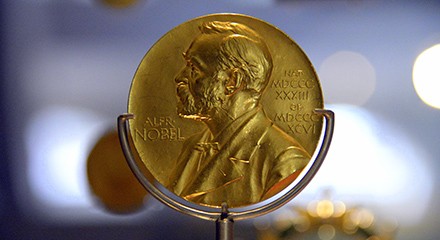
Rewarded for total failure
New Keynesian predictions about future economic activity have been way out of line. They have consistently got one thing wrong after another, says Michael Roberts. It is, therefore, fitting that Robert Hall and Michael Woodford have been handed this year’s Nobel prize in economics
This year’s Nobel prize went to two American mainstream economists, Robert Hall and Michael Woodford, for their work on the “microeconomic foundations of macroeconomic stabilisation”.1
According to the Nobel Academy, Hall and Woodford won the prize “for developing new economic models that help governments and central banks stabilise their economies to minimise the impact of external shocks … the laureates have helped us smooth out the economy’s peaks and troughs”, adding that their models have been “extremely helpful in dealing with the economic downturns that have affected us”.
Their work “has provided us with a stable theoretical foundation for the models that are now used by central banks and governments around the world,” claimed John Hassler, the chair of the Committee for the Prize in Economic Sciences. “With them, we are better equipped to deal with shocks in the economy, such as energy crises or sudden changes in how much households consume.” Central to their models was the insight that households and businesses are “forward-looking” when making decisions about savings or how to price products. Governments and central banks can influence this view of the future when communicating their plans for fiscal and monetary policy, respectively, and so “move the economy in the right direction”, the academy said.
Really? There are a number of things here. First, have the models developed by Woodford and Hall really provided a “stable theoretical foundation” for helping central banks make the right decisions about interest rates and monetary injections, or governments about taxation? Second, are central banks really “better equipped to deal with shocks in the economy”, thanks to Woodford and Hall? And even more important for the majority of us, have the monetary and fiscal policy proposals of Woodford and Hall actually enabled central banks and governments to get “an economy moving in the right direction”?
Woodford and Hall are from what is called the New Keynesian school of economics. When Keynesian-style macro-management failed in the 1970s in “moving the economy in the right direction”, the New Keynesian school emerged. They dropped Keynes’s basic approach of what happens to aggregate demand in an economy. Instead, the New Keynesians concentrated on explaining ‘business cycles’ or ‘fluctuations’ in capitalism from what they called its ‘microfoundations’: ie, the behaviour and expectations of individual businesses and households.
The job now was not to look at macro or aggregate data, but to work out a ‘model’ that starts with some premises of agent (consumer) behaviour or preferences; incorporate some possible ‘shocks’ to the ‘general equilibrium’ of the market; and then consider the number and probability of possible outcomes. Thus were born Dynamic Stochastic General Equilibrium (DSGE) models. They had ‘equilibrium’ because they started from the premise that supply would equal demand ideally; they were ‘dynamic’ because the models were incorporated for changing behaviour by individuals or firms (agents); and they were stochastic, as ‘shocks’ to the system (trade union wage pushes, government spending action) were considered as random with a range of outcomes.
This is now what most New Keynesian economists spend their time doing. Forget empirical evidence, forget macro data, find a ‘micro’ foundation (model) that might help to offer a guide to what possibly might happen. The New Keynesians followed another ‘Nobel’ prize winner - the neoclassical economist, Robert Lucas (‘the problem of depressions has been solved’). Lucas argued that just looking at economic stats provided no theoretical base and thus was open to the distortion of spurious correlations. You needed to have firm micro theory. But, as Lars Syll has pointed out,
The almost quasi-religious insistence that macroeconomics has to have microfoundations - without ever presenting either ontological or epistemological justifications for this claim - has put a blind eye to the weakness of the whole enterprise of trying to depict a complex economy based on an all-embracing representative actor equipped with superhuman knowledge, forecasting abilities and forward-looking rational expectations.2
DSGE models have been proved to be worthless in explaining anything. They failed to predict before or explain afterwards the causes of the great recession (2007-09) and were unable to explain the subsequent weak recovery (or long depression).
Natural rate
Woodford’s work is based on the idea that there is a ‘natural’ rate of interest, at which desired investment in new structures, equipment and technology matches desired saving by households and firms in a ‘general equilibrium’ situation. This idea comes from the economist from the late 19th century, Knut Wicksell. He argued that, if investment exceeded savings in an economy, the natural rate would rise, so that savings would then increase to match investment and vice versa. If, for some reason, the natural rate did not rise, then there would be ‘overheating’ in the economy, in the form of inflation. In the recession example, savings would be greater than investment and, if the natural rate did not fall enough to reduce the desire to save, then there would be less than full employment.
Now you can see why this concept of a ‘natural rate’ might be useful to economic policy under capitalism. Maybe current market rates are too high compared to the natural rate and that explains why we have a ‘glut of saving’ (hoarding of money) and not enough investment - stagnation. But maybe market rates are too low, below the natural rate, so that we have inflation due to investment exceeding saving. What we need to find is the natural rate of interest that avoids inflation and stagnation.
But is there such a ‘natural rate’ of interest? Keynes dismissed the idea,3 arguing that there was not one static natural rate, but a series of rates depending on the level of investment, consumption and saving in an economy.4 And there was no reason to assume that the capitalist economy would ‘correct’ any mismatch between investment and savings, particularly in a depression, by market interest rates adjusting back to the ‘natural rate’ in some automatic process. In a depression, where investment returns are too low, compared with the rate of interest, capitalists will hoard their money rather than invest in a ‘liquidity trap’.
Marx too denied the concept of a natural rate of interest.5 For him, the return on capital, whether exhibited in the interest earned on lending money, dividends from holding shares or rents from owning property, came from the surplus value appropriated from the labour of the working class by the productive sectors of capital. Interest was a part of that surplus value. The rate of interest would thus fluctuate between zero and the average rate of profit. In boom times, it would move towards the average rate of profit and in slumps it would fall towards zero. But the decisive driver of investment would be profitability, not the interest rate. If profitability were low, then holders of money would increasingly hoard money or speculate in financial assets rather than invest in productive ones. What matters is not whether the market rate of interest is above or below some ‘natural’ rate, but whether it is so high that it squeezes any profit for investment in productive assets. Ironically, Wicksell agreed. According to him, the natural rate is “never high or low in itself, but only in relation to the profit which people can make with the money in their hands, and this, of course, varies. In good times, when trade is brisk, the rate of profit is high, and - what is of great consequence - is generally expected to remain high; in periods of depression it is low, and expected to remain low.”
Nevertheless, the idea of a natural rate of interest (R*) was promoted by New Keynesians like Woodford. The central proposition of Woodford’s book, Interest and prices (2003), was that central banks could stabilise economies by adjusting interest rates relative to a ‘natural’ rate and by managing ‘inflation expectations’.
Two problems here. The first is that R* cannot be directly observed. Secondly, household expectations appear heavily influenced by past inflation, everyday prices and political affiliation, and households pay remarkably little attention to central bank policy announcements. As Federal Reserve economist Rudd concluded,
Economists and economic policymakers believe that households’ and firms’ expectations of future inflation are a key determinant of actual inflation. A review of the relevant theoretical and empirical literature suggests that this belief rests on extremely shaky foundations, and a case can be made that adhering to it uncritically could easily lead to serious policy errors.6
And it has. That has not stopped central banks adopting Woodford’s models to make monetary policy decisions. For example, European Central Bank official Isabel Schnabel is very keen on R*. However, she has admitted that “The problem is that it cannot be estimated with any confidence, which means that it is extremely hard to operationalise ... What we really care about is the short-run R-star, because it is relevant in determining whether our interest rates are restrictive or accommodative. The problem is we don’t know where it is precisely.” (!)7
Post-pandemic
Minneapolis Fed president Neel Kashkari recently stated: “our various workhorse models for the economy have struggled to explain and forecast the pandemic and post-pandemic periods, given the extraordinary changes and disruptions the economy has experienced. So I also look to measures of economic activity for signals to try to evaluate the stance of policy.”8 In other words, the New Keynesian theory cannot be applied to reality, because the reality is that economic activity drives inflation and money circulation, not vice versa.
The predictions of the New Keynesian models on future economic activity have been way out of line. Woodford argued in a 2007 paper just before the global financial crash that “globalisation, even of a much more thorough sort than has yet occurred, is unlikely to weaken the ability of central banks to control the dynamics of inflation”. That turned out well. Central bank monetary policy, based on the theory of a natural rate of interest and ‘inflation expectations’, failed to get inflation rates up to the 2% target set for the 2010s and it has failed to bring them down to that target in the current inflationary spike.
In 2012, central banks were worried that their policy of monetary injections (quantitative easing) was not working according to the New Keynesian model in achieving economic growth and modest inflation. Woodford presented a paper in which he argued that if central banks could persuade businesses and households that interest rates were going to stay very low for a long time, then that would inspire ‘confidence’ and thus lead to increased spending and investment.9
This led to the central bank policy called ‘forward guidance’.10 This was an attempt by central bankers to persuade businesses and consumers that they do not have to worry about rising interest rates for years ahead and so they can start spending now. But such guidance, designed to stimulate expectations, was also a miserable failure. QE measures had little or no effect on boosting the real economy. As a result, the current Fed chair, Kevin Warsh, has been less than enthusiastic towards using ‘forward guidance’.
The Woodford New Keynesian models do not include the key investment driver, which is profitability rather than a natural rate of interest or ‘forward guidance’. In the New Keynesian models, everything starts with consumer preferences and Keynesian aggregate demand is reduced to just consumption.
This is where the work of Robert E. Hall, the other Nobel prize winner, comes in. Hall offers an economic model founded on the ‘micro-foundations’ of consumer behaviour. And it is this that determines the level of consumption in an economy and thus economic growth.
But Hall’s contribution is odd, to say the least. He argues that changes in consumption are not driven by changes in a person’s income, but are either unpredictable or in the long run determined by the ‘natural’ real rate of interest. Hall is more interested in tax policy than monetary policy. According to him, consumption is not affected by taxes, so that taxes like VAT should be the main government revenue earner, allowing taxes on profits and income to be reduced. In the 1980s, Hall developed a ‘flat tax’ proposal.11 All workers would pay tax at a single rate, while interest, dividends and capital gains would not be taxed. Flat taxes have been adopted by ‘free market’ governments in the Baltic states and are often proposed by ‘libertarian’ parties, in opposition to taxes designed to reduce inequality.
In sum, Woodford and Hall offer theoretical models based on individual agent behaviour and on a quaint belief in some equilibrium natural rate of interest. But “moving the economy in the right direction” using their predictive models has been a total failure.
Maybe that’s worth a Riksbank prize, if not a Nobel one!
Michael Roberts blogs at thenextrecession.wordpress.com
-
www.ecb.europa.eu/press/blog/date/2026/html/ecb.blog20261019~b833d15fce.en.html.↩︎
-
mainlymacro.blogspot.com/2012/07/heterodox-and-mainstream-macroeconomics.html.↩︎
-
See thenextrecession.wordpress.com/wp-content/uploads/2015/11/f2401-16-broadbent3.pdf.↩︎
-
See www.levyinstitute.org/pubs/wp_817.pdf.↩︎
-
www.marxists.org/archive/marx/works/1894-c3/ch22.htm.↩︎
-
ideas.repec.org/p/fip/fedgfe/2021-62.html.↩︎
-
www.ecb.europa.eu/press/inter/date/2024/html/ecb.in240207~f5dd364a89.en.html.↩︎
-
www.minneapolisfed.org/article/2024/policy-has-tightened-a-lot-how-tight-is-it.↩︎
-
www.kansascityfed.org/research/jackson-hole-economic-symposium.↩︎
-
See thenextrecession.wordpress.com/2013/08/13/a-blind-guide-dog.↩︎
-
www.hoover.org/research/flat-tax.↩︎