
16.07.2026
End dictatorial control
Whether it is Spain or Argentina, the lasting legacy of the 2026 World Cup will be the open violation of football’s integrity by its own governing body. The game cannot be left in the hands of FIFA, insists Paul Demarty
As I write, the final outcome of the World Cup has yet to be decided, yet its final meaning is surely settled.
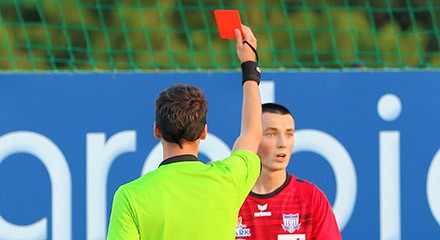
The meaning of the tournament will hinge not on the winner, but on what should have been a relatively minor matter - the sending off of Folarin Balogun, a star player of the US national team in the match against Bosnia and Herzegovina, in the round of 32 teams. By all accounts, this was a soft red card, but not scandalously so - as the pundits like to say, ‘You’ve seen them given’. But it seems to have dawned slowly on many Americans, whose interest in the sport they call by its old Eton nickname of ‘soccer’ is tenuous at best, that part of the punishment is a suspension. Balogun was to miss the last-16 tie with Belgium.
Rumours began to circulate of efforts to get the suspension rescinded. The American soccer association was considering its options; and a legal team headed by Andrew Giuliani - son of the former New York mayor and increasingly grotesque Trump flunkey, Rudy, and Trump’s man on the World Cup organising committee - was planning on going after the referee. Within a few days, it seemed FIFA (the Fédération Internationale de Football Association) had capitulated to pressure, invoking unilaterally its right to suspend the sentence, and therefore clear Balogun for the Belgium game. Speculation that the pressure may have come from the very top came to an end a day later, when Donald Trump boasted of having achieved this outcome by calling his good friend, FIFA president Gianni Infantino.
The immediate matter was resolved quickly, by the Belgian team, who dealt the Americans a memorable 4-1 spanking. Their Twitter account posted a photomontage of the goal celebrations, captioned “overturn this!” Pro-Belgian sentiment on a level unseen since the opening moves of World War I had spread widely in the football world, and their victory at least gave us all a bit of catharsis. But the fundamental problem remains: FIFA, the administrator of the World Cup and the governing body of world football, had been shown unambiguously to have interfered in its own competition, in order to keep a local strongman sweet.
Integrity
That, of course, raises the question: how many other matters have been tweaked to the satisfaction of the FIFA people? There were already questions in the air. A red card suspension for Cristiano Ronaldo of Portugal - by some measures the most famous man in the entire world - had already been suspended in the same way at the very beginning of the tournament. The four remaining teams in the tournament are all big commercial propositions - and, of course, include at least two genuine megastars: the French striker, Kylian Mbappé, and Argentina’s Lionel Messi, widely regarded as the greatest player of all time and having a very good tournament, in spite of his age.
Argentina’s victory over Egypt was clouded with controversy over refereeing decisions. Meanwhile Norway’s manager was apoplectic to see England awarded a goal in the July 11 quarter-final, which began with the ball apparently colliding with a TV camera cable (which should have resulted in possession being handed back to Norway). FIFA insisted that the ball’s internal microphone had recorded no conflict, but who could believe them now?
This culture of pervasive suspicion of official decisions has already begun to blight the game, especially in this country. Large numbers of fans seem to believe that the referees are involved in a vast conspiracy against them. The threatened American lawsuit in the early days of the Balogun affair is a depressing sign that power in the global hegemon has been captured by the sort of puce-faced men whom we find insisting that dark forces are behind the poor luck of Arsenal with penalty decisions.
Now we have, effectively, an official mandate for such idiocy. FIFA has shown it will do it. It has shown that there is no depth to which it will not sink to keep its big quadrennial party on the road.
It was only 10 years ago that Gianni Infantino was elected president of FIFA, at an extraordinary congress, following on from the organisation’s last great scandal: the arrest of half its executive committee on corruption charges by Interpol agents the previous year. Beyond the circumstances, there was probably not very much extraordinary about the congress, whose political result was obtained by the usual combination of back-scratching and quid pro quo dealings.
Nonetheless, under the circumstances, Infantino could not avoid making the right noises about being a new broom. A little spring cleaning, after all, was desperately needed. Infantino, in reality, was the continuity candidate. Bizarrely, he and his predecessor, Sepp Blatter, hail originally from the same Swiss canton.
Blatter, by the by, launched his own broadside against the Balogun reprieve, to much amusement. This is worth mentioning because there is a link between Blatter’s downfall and all this recent insanity. The FIFA arrests of 2015 ultimately concerned alleged corruption in the decision to award hosting rights of the 2018 and 2022 World Cups to Russia and Qatar, frustrating bids by Britain and the US. Blatter had shored up his own position within FIFA by favourable relationships with the mass of member associations outside the main markets, and other powerful countries like the US. The mass arrests sent a message: you must pay tribute to the big dog in global affairs. It is from here, rather than from Infantino’s personal degeneracy, that we got to the FIFA ‘peace prize’ and the Balogun scandal.
So the new broom, sure enough, turned out rather like the old broom. This is surely a matter of political-economic structures, and not the particular perfidy of the sons of Valais. As liberal critics of FIFA often point out, the organisation takes on two distinct roles that have contradictory incentives. On the one hand, it is a regulatory body, the last court of appeal in disputes over the rules, formally requiring that member federations submit audited accounts and so on. On the other, it is an event promoter. The World Cup is a big deal. A lot of money is floating around, and FIFA has a direct interest in maximising it.
The division of matches at the current tournament into quarters, American-style, is ostensibly in the name of offering thirsty footballers “hydration breaks”, but referees were free to do that already. Its real aim, with comic obviousness, is the introduction of two extra ad breaks into broadcasts. The loss of trust in the disciplinary process is so insidious because, bluntly, if Cristiano Ronaldo cannot play, Infantino loses money, and we all know it.
Patronage
Despite widespread outrage at the open corruption of the current tournament, Infantino’s position looks secure, and this is, again, for structural reasons. Where does all that money go? Directly into the pockets of Gianni and his cronies, to an extent, but also into the coffers of FIFA, which he controls. Relatively small sums in FIFA’s terms - a few million dollars here or there - can make a big difference to a more marginal football association in terms of building stadiums or grassroots facilities. There thus developed - especially under Blatter, as mentioned above - a complicated patronage regime that could deliver votes when it counted.
There is also the stick - we mentioned those audited accounts deliberately, because member federations are appalling at delivering them on time. FIFA tolerates this, but, of course, can decide to demand compliance at any time.
There is thus a peculiar problem with the recent anti-FIFA backlash, which is that its chief protagonists are to be found in the Union of European Football Associations (UEFA). This is, without a doubt, the second-most powerful organisation in world football. The European football system is vastly more lucrative than any other market; the English Premier League is the greatest power within it, but there remain major leagues in Spain, Germany and Italy, and to a lesser extent France, the Netherlands and Portugal - to say nothing of the European international tournament.
European money has a hugely distorting effect on the global game. Many have noted the importance of diaspora players in some teams, especially in Africa. In a way the most spectacular example was Cape Verde - an archipelago off the west African coast with a population roughly equivalent to Bristol - whose team gained enormous respect for its determined and highly respectable performances, getting out of the group stages and forcing reigning champions Argentina to extra time in the last 32, when they were expected to be tournament whipping boys.
Most of their players are from Portugal (Cape Verde is a former Portuguese colony), and play in the Portuguese lower leagues, including that universal fan favourite, icy-veined goalkeeper Vozinha. Central defender Pico Lopes is a Dublin boy, who plays for Shamrock Rovers, and was famously recruited to Cape Verde on LinkedIn. (The Irish team itself, of course, has long relied on the Irish diaspora.)
There are many more eligible males, let us say, in the home country than the diaspora in most cases. But the sheer disparity in the resources available to the big European leagues and everyone else ensures that people who have been through the associated training systems - even at lower levels - emerge as far stronger footballers on average. For the same reason, ultra-talented youngsters tend to wash up on the shores of these academies very early in their lives (Messi joined the Barcelona academy at 13, for example).
Danger of death
If then the fight for the future of football devolves to a slugfest between the UEFA and FIFA hierarchies, there is little hope. It is merely a fight between two corrupt bureaucracies, whose principal interests are commercial. This will, before long, be the death of football.
And I mean death. The skulduggery of this World Cup is a stark reminder that, under purely commercial pressure, compromises must be made to ensure a high-quality ‘product’. The terminus of this logic is, for practical purposes, professional wrestling. Ronaldo and Messi are not the sport’s first global stars - one could at least name, in addition, Pele and Diego Maradona. The sheer extent of their individual fame, however, is already distorting the football of their respective national sides, albeit far more egregiously in the case of Portugal. The product is a soap opera - like pro wrestling. It must have its faces and heels, its melodramatic beefs, and its catharsis, ideally under the control of some creative team.
Football is worth saving, because it is one of the only truly global forms of popular culture that does not, yet, have its storylines centrally administered, as in the ‘five year plans’ of Marvel Studios. Its rivalries arise spontaneously; hardcore fans, especially in continental Europe and South America, insist on disciplining their teams’ owners. Even given the vast disparities in resources, this is a game that has ways for low-quality teams to beat good ones. Cape Verde were really not that far from ejecting Messi from this year’s tournament, after all. Goals are so rare; even a true minnow only has to be lucky once, after the whistle is blown for kick-off.
Should football go much further on its current path of total capitalist dominance, it will be replaced. Its replacement will look more or less like football. People will kick a ball towards a net, more or less successfully. But it will be robbed of its carnivalesque plebeian libido, and of its ability to generate chaos. It will cease to be an art form, whose materials are opposed teams and frenzied terraces, skill, athleticism and psychological terrorism. It will, instead, be merely an entertainment product, like all the others.
Control of the sport must be devolved to the practitioners and fans themselves, in truly democratic arrangements. Certainly its future is not safe until the last FIFA president is hung with the guts of the last one from UEFA.