25.06.2026
Negotiations proceed in Geneva
There is little enthusiasm for the interim agreement. In Iran, hardliners wanted to keep on fighting and have, as a result, suffered from a government crackdown. But, in Israel, there is fear that Trump is putting his personal political interests first. Yassamine Mather looks at the new rhetoric coming from Washington
Despite a brief interruption on June 20 - when Iran announced it was closing the Strait of Hormuz, citing Israeli military provocations in Lebanon - the broader diplomatic process has not derailed. The White House and vice-president JD Vance claim they are “highly committed” to keeping the Memorandum of Understanding on track. Ships have indeed started moving in and out of the Strait of Hormuz. Hopefully the nightmare of the 11,000 trapped sailors will soon be over.
This week, Vance and Iranian parliament speaker Mohammad Bagher Ghalibaf officially sat down in Switzerland. Specialised working groups are now tackling the twin pillars of the framework: lifting sanctions and limits of nuclear enrichment.
There is an underlying assumption that, even if Israel attempts to launch further strikes on southern Lebanon to disrupt the process, the bilateral talks will continue. This is not just a matter of the MoU text, but a paradigm shift in Washington’s rhetoric and the immediate economic needs of both sides.
The Trump administration has brokered a kind of ceasefire between Israel and Hezbollah. While the Israel Defence Forces have drawn down some of their forces and eased northern border civil defence measures, there are reports that the US has heavily restricted Israeli offensive operations.
Following the deaths of six Israeli soldiers, US restrictions mandate that IDF troops in southern Lebanon may only fire in cases of a direct threat. This resulted in the Israeli leadership halting some military operations, such as the planned demolition of a major underground Hezbollah drone factory in Majdal Zoun.
Prime minister Benjamin Netanyahu and defence minister Israel Katz are accused of misleading the Israeli public. Publicly they insist Israel will not withdraw from the southern security zone (where, for instance, Beaufort Castle is situated) and claim the IDF has unrestricted freedom of action. But US restrictions are already actively curbing Israeli military operations. This political game of smoke and mirrors draws parallels to past Israeli government rhetoric: for example, inflating the strategic importance of Gaza’s Philadelphi route during the 2024 hostage negotiations.
Following US-Iran memorandum negotiations mediated by Qatar and Pakistan in Switzerland, a new “deconfliction cell” is being established to oversee the Lebanon ceasefire. Israel is excluded from this mechanism, effectively stripping it of its ability to independently manage events in Lebanon.
Of course, Donald Trump’s primary motivation in all this is securing a stable arrangement in the Persian Gulf to allow a swift winding down of US forces. Zionist critics argue that he is prioritising his own immediate personal political interests ahead of the US midterm elections - aiming to curb war-driven inflation and high petrol prices - at the expense of Israel.
According to the same sources, a passive military presence in southern Lebanon exposes IDF soldiers to recurring logistical risks and specialised threats, such as fibre-optic-operated drones. While Iran’s economy and military have been severely damaged by US and Israeli strikes, the soft terms of the emerging US-brokered arrangements are bolstering Tehran’s confidence and providing the space needed for Iran and Hezbollah to rebuild their military capabilities.
Policy departures
Donald Trump has recently made highly unusual concessions on key regional ‘security’ issues in the Middle East, directly contradicting long-standing US and Israeli policy positions:
- Missile programme: Trump remarked that because other regional powers possess advanced missile technology, it is fundamentally unfair to demand that Iran unilaterally dismantle its own programme - a stance that undercuts one of Israel’s main strategic complaints.1
- Nuclear enrichment: Rather than treating enrichment as an absolute red line, Trump now suggests that, because Iran may require enrichment for civil and domestic purposes, the focus should be on regulating the level of enrichment rather than forcing a total halt.2
-
Sanctions and assets: Trump argued that withholding frozen Iranian assets could damage confidence in the dollar, saying that, if the money were not returned, “nobody would ever invest in the dollar again”.3
Concurrently, Vance issued unprecedented critiques regarding Israel’s behaviour. During a White House press conference on June 18, he openly signalled that certain elements within Israel had deliberately escalated actions in southern Lebanon in the attempt to sabotage the deal: “We are not going to let this happen again”. Furthermore, both he and Trump have broken with traditional rhetoric regarding Hezbollah, suggesting that the presence of militants inside a civilian structure does not justify the total destruction of an entire building. Of course, no-one should be fooled: this shift is primarily due to economic worries. Trump has candidly admitted that western strategic fuel reserves are dwindling to a matter of weeks, making energy stability and lowering oil prices Washington’s overriding priority.
No doubt all of this could change next month or even next week. However, for the time being, both Iran and the US have no option but to try and defend the MoU.
While the administration pushes forward, the American public remains deeply sceptical. A CBS News/YouGov poll, conducted following the MoU’s electronic signing, reveals a stark disconnect between the public’s desire to end the war and the government’s view of the actual terms:
- Ending the war: 78% of Americans prefer to end the war now, while just 22% want to hold out for further Iranian concessions. Though Trump advisors have celebrated this as an endorsement of the administration, the rest of the poll indicates otherwise.
- Evaluating the MoU: only 22% of Americans believe the interim agreement is better for the United States, whereas 37% believe it favours Iran (with 41% viewing it as equal).
- Partisan scepticism: only 39% of Republicans believe the Trump administration negotiated a win, meaning only about four in 10 members of Trump’s own party back the accord.
Factional warfare
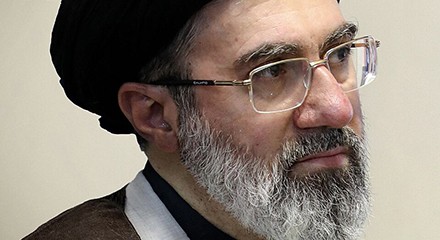
Meanwhile, within Tehran’s political circles, a complex game of accountability and ideological survival is playing out. Supreme leader Mojtaba Khamenei reportedly hesitated significantly before endorsing the framework. In a statement read on his behalf he says he was ultimately persuaded by president Masoud Pezeshkian. Iranian politicians were terrified of taking personal responsibility for the concessions - a tension exacerbated by persistent, unverified rumours regarding the supreme leader’s health status.
As a result, a number of ideological rifts have emerged within the regime. On the one hand, there are pragmatic conservatives and ‘reformists’ in the government and Islamic Revolutionary Guard Corps (IRGC) camp, including:
- president Masoud Pezeshkian;
- foreign minister Abbas Araghchi;
- parliament speaker Mohammad Bagher Ghalibaf;
- elements of the Supreme National Security Council and the IRGC.
These are the groups that back the deal. They view sanctions relief and de-escalation as absolute necessities after the war. Pezeshkian argues that Iran must decisively end its ‘no war, no peace’ paralysis. Ghalibaf and pragmatists in the IRGC recognise that, despite radical claims of military victory, the underlying domestic economy is in a critical condition. We can add Quds Force commander Esmail Qaani, who is giving conditional support to the deal.
Many of the above insist that Iran’s regional allies, particularly Hezbollah, must be fully protected within any final settlement. Demonstrating this nuanced line, Qaani publicly backed the negotiators after they came under fire from hardliners, signalling that the internal dispute is over terms, red lines and regional leverage rather than the validity of diplomacy itself.
Compromise
On the other hand, there are the hardliners (the ‘ideological opposition’), who reject the deal and argue that any compromise risks complete ‘capitulation’, and oppose major concessions on the nuclear issue. They demand Iran retain aggressive leverage over the Strait of Hormuz and maintain maximalist pressure to force the US entirely out of the region!
To secure the agreement, the regime has initiated a swift internal crackdown on rightwing hardliner dissent. For example, Saeed Jalili was quietly removed from his recent post. A rightwing media commentator who publicly attacked the MoU on state television, he was forced to resign - followed closely by the resignation of the television channel’s director.
Following the announcement of the MoU, the Iranian rial rose by roughly 10% compared to foreign currencies. While organisations like the International Monetary Fund and World Bank predict inflation could drop to between 30% and 35% due to sanctions relief, these figures remain very high for ordinary citizens, who are facing systemic poverty.
For the moment, the domestic street is quiet. The regime successfully continues to organise large-scale public celebrations of the signing, demonstrating loyalty to the regime. At the same time, intense economic fatigue has fostered a sense of resignation rather than active protest. Even on social and cultural fronts, the IRGC has shifted its tone, broadcasting propaganda tracks explicitly welcoming women, whether they wear the full hijab, a partial headscarf, or no headscarf at all - signalling a managed, tactical retreat from the enforcement flashpoints that previously sparked the Woman, Life, Freedom movement.
Obstacles
The framework of this interim agreement remains very ambitious, promising the lifting of all unilateral US sanctions alongside the rollback of UN Security Council resolutions. Legally, a US president cannot unilaterally dissolve UN sanctions; however, we all know that the US imposed its will regarding the imposition of current UN sanctions and the Trump administration clearly admits that it can introduce a motion reversing sanctions - one that Russia and China will naturally support. Simultaneously, European allies are pushing back. France has explicitly stated that a bilateral US-Iran agreement does not alter French or EU sanctions. Vance reportedly dismissed these concerns, implying European compliance with past sanctions was merely a byproduct of American enforcement rather than independent foreign policy.
For Arab leaders in the Persian Gulf, the geopolitical calculus is exceptionally complicated. On the one hand, their own population is deeply sympathetic to Iran’s regional posturing, making overt opposition to the MoU risky for regimes. On the other hand, there is a deep-seated distrust of Iran after infrastructure attacks, paired with an acute fear that Israel could bomb Gulf states out of existence.
To mitigate these threats, Gulf states are utilising a proposed $300 billion regional reconstruction fund as a vital insurance policy. By using their capital to purchase or develop physical infrastructure inside Iran, they are attempting to establish mutual economic dependencies. The logic is simple: if the Gulf states own a stake in Iran’s domestic economic infrastructure, Tehran will have a direct financial incentive to avoid targeted military conflicts with its neighbours. However, this is a double-edged sword; inside Iran, hardliners are already criticising the deal, complaining that the government is selling off sovereign assets to the Persian Gulf principalities.
From the point of view of the Iranian working class, the central flaw of this peace process mirrors the systemic failures of previous sanctions-relief eras. Unless there is a fundamental reversal of privatisation and a structural war against state-level corruption, the influx of unfrozen assets and foreign investment will simply enrich the same oligarchic networks.
The corrupt state officials and senior IRGC commanders who enriched themselves by smuggling and manipulating the sanctions economy are the exact same individuals positioned to act as the primary corporate partners for incoming capital. If the state receives a massive financial windfall, it will likely distribute a highly calculated, minimal amount to the poorest sectors of society, purely to suppress the immediate threat of bread riots and labour strikes.
The vast majority of the incoming billions will simply be absorbed by entrenched bureaucratic corruption, leaving the underlying structural misery of the Iranian working class completely unchanged.