
15.10.2026
The last man of ideas
Paul Demarty reviews Francis Fukuyama In the realm of the last man London 2026, pp304, £20
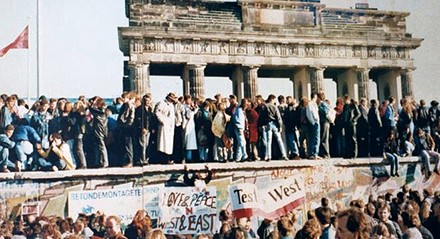
In 1989, The National Interest - then the house journal of the American neoconservatives - published a long essay by one of that movement’s bright young things: Francis Fukuyama.
‘The end of history?’ - later expanded to book length as The end of history and the last man - made Fukuyama’s name, and rapidly joined that dubious fraternity of texts which get namedropped without ever being read. Thus it is usually taken to be a triumphalist herald of the collapse of communism and the entry of the world into an endless, prosperous peace under the sign of liberal capitalist democracy.
In fact, the book was as much a warning as a victory lap. Drawing on Alexandre Kojève’s extremely influential reading of Hegel’s Phenomenology of spirit, at the centre of human life, as he saw it, was the struggle for recognition, and indeed liberal democracy was the only form in which this recognition could be distributed more or less equally. However, part of what people wish to be recognised for is exceeding the abstractly equal condition of all: they sought to exceed the norm. This pride is ultimately rooted in what in premodern philosophy they used to call ‘the passions’, although Fukuyama prefers thymos from Plato’s Greek. He predicted that this would prove difficult to manage.
Experience suggests that, if men cannot struggle on behalf of a just cause, because that just cause was victorious in an earlier generation, then they will struggle against the just cause. They will struggle for the sake of struggle. They will struggle, in other words, out of a certain boredom - they cannot imagine living in a world without struggle. And if the greater part of the world in which they live is characterised by peaceful and prosperous liberal democracy, they then will struggle against that peace and prosperity, and against democracy.
This quote is pointedly revisited in the final chapter of Fukuyama’s latest book, In the realm of the last man, which is a kind of intellectual memoir. He is self-critical of aspects of the earlier book, but alert to the irony that exactly the same phenomena widely taken to refute its argument seem to him to vindicate it. Liberal democracy is the end of history, because no further progress is possible. Regression, however, is always an option.
Apologies
In the course of In the realm of the last man, Fukuyama introduces us to his family, various of his hobbies, and a number of mentors, but above all this is a story of how he got from youthful liberalism to the highly philosophical conservatism of The end of history - and from there, finally, to the rather technocratic political outlook he now endorses, and whose retreat in the face of ‘populist’ backlash he sincerely fears. In that respect, it is formally reminiscent of John Henry Newman’s Apologia pro vita sua, in which the infamous Catholic convert attempted to show that he got to his conclusions honestly.
But Newman and Fukuyama are not very much alike as companions for the reader. Fine writer though he was, Newman was self-serious to the point of comedy. His conversion, as retold, is a matter of an exceptionally gifted and stubborn pedant finally losing patience with the philistine chumminess of broad-church Anglicanism. Fukuyama is rather more consistently likeable, strange as it is to say. This book is very grateful and gracious, even to people with whom he has politically broken over the years. He shows himself capable of self-criticism. His enthusiasm for his hobbies is affectingly childlike; his unending tour of the government, think-tank and development world, with such a relentlessly sunny attitude, leaves one with the impression of a globalist-technocratic Forrest Gump.
That world, of course, seems to be fading from view - drowned, as Fukuyama sees it, in the rise of identity politics of left and especially right. It is not clear whether he intends his comments on this turn of events as a polemical call to arms or an elegy for a cosmopolitan future foreclosed. So the book poses the question of the place of the author of The end of history in history - and, more broadly, that of the class of liberal technocrats, of which he has become an admirably tenacious member and defender.
Born into a family of recent immigrants to the US from Japan - his grandfather had emigrated to avoid enlistment in the Russo-Japanese war, while his mother was born in Kyoto - Fukuyama initially inherited the strongly liberal politics of his father. Several members of his family were interned during World War II, which no doubt shaped his father’s outlook. The family was also academically inclined on both sides - it was no surprise when young Francis went up to Cornell University.
Strauss waltz
There he encountered Allan Bloom - a crucial link between Leo Strauss and the Straussian movement in philosophy and later neoconservatism. Strauss was a fascinating and obscure figure in 20th-century philosophy, whose practice was focused on close reading of the classical texts; his hermeneutical method was to assume that great philosophical teachers had both an exoteric, outward-facing sense and an esoteric sense, which was communicated directly to disciples, but might perhaps be discerned in the subtle contradictions in the texts themselves.
The resulting philosophy, of course, had the defects of other such ‘esoteric’ reading styles - one could mention Althusser’s ‘symptomatic reading’ as a slightly later example, or some of Freud’s more tendentious exercises in literary analysis - but it also had a vision of what the practice of philosophy really meant, which was a pursuit of the examined life among friends, like Plato’s Symposium or others of his chamber-piece dialogues between Socrates and several interlocutors. It tended, that is, to produce local ‘symposia’, focused on charismatic individuals - whether Harry Jaffa at Claremont College, Harvey C Mansfield at Harvard or Bloom at Cornell.
Though impressed by the Straussians, Fukuyama also became entangled with the great excitement over ‘French theory’ in American humanities departments at this time - above all, the key influence was Jacques Derrida. He travelled to study in Paris with the master, but rapidly became disillusioned with the poststructuralist credo of absolute relativism, radicalised Nietzschean scepticism and the rest. When he returned to the States, it was to study political theory under Mansfield at Harvard. He fell in with the first generation of neoconservatives, as they agitated for the US to get on the front foot in the cold war.
The end of history is plainly a product of this scene. As he tells it here, he had become fascinated by the polemical exchanges between Strauss and Kojève in the 1950s (Bloom had been a student of both at different times), Strauss rejecting Kojève’s historicism in favour of the eternal truths of philosophical reflection. Fukuyama attempted to chart the middle way, accepting in moderated form Kojève’s schema that saw history end, essentially, in the Napoleonic destruction of the anciens régimes of Europe; the eternal truths of the tradition prized by Strauss yielded, again, the ambiguous prognosis of potential regression.
Such a prognosis fitted neatly into the 1990s triumphalist neoconservatism of the Project for a New American Century (PNAC), of which Fukuyama was a founding signatory. It authorised an American self-conception as the summit of human achievement, past and future; but this victory was permanently under threat by its enemies, the old gods of tribe and patronage, the fury of misdirected thymos.
Break
The bloody history of this creed need not be recited in full here, but some attention must be given to Fukuyama’s strange role in it. He was working as a Middle East analyst for much of the years leading up to 9/11 and the invasion of Iraq in 2003. By his account here, he had become very sceptical of the ability of America to construct a stable order in Iraq, should it invade and topple Saddam Hussein, and told his colleagues so. He owns up to having believed in the ‘weapons of mass destruction’ stories, but insists that there were good reasons to do so, and Saddam had in fact been bluffing to imply he had such weapons as a crude measure of deterrence. It is rather thin stuff, admittedly, but he has no reason to lie about it at this remove, and so I take it that he believed it at the time.
Despite his misgivings, apparently, he signed on to an open letter from various PNAC luminaries, drafted by Bill Kristol, calling for a full-scale attack. Why? His account of this is stunning in its naivety: “I have to admit that I did this rather casually; Bill was an old friend of mine and I hadn’t been paying close attention to the situation in the Middle East in that period. While I had doubts about his anti-China positions, I had few qualms about the desirability of removing a bloodthirsty dictator from power.”
Bill must have had a good reason to write this letter. Later he pleads that he had taken Paul Wolfowitz to be trustworthy on this, since he was incredibly intelligent, and has learnt the lesson that even the very smart can be disastrously wrong: “When I first worked for him I assumed that, if he said something I didn’t understand or disagreed with, it was I who was in the wrong. And yet it sometimes takes an extremely intelligent person to convince themselves of something implausible.” No shit.
To Fukuyama’s credit, he reversed course very rapidly, becoming the first major neocon to break ranks, as early as 2004. Though too late for the Iraqis, who would suffer the consequences of the dreams of Wolfowitz, Kristol et al to the tune of millions of deaths, this was still early enough that the hawks could delude themselves that everything was going to work out all right. Fukuyama, however, had already begun the studies of political dynamics that would shape his later work. He knew that state capacity counted for something and, having destroyed the Iraqi state, the Americans could only bring warlordism. He had the intellectual honesty to say so - and alienate many of his old friends.
The lessons learned from this episode are not uninteresting, but extremely partial. The central problem exercising him since the 1990s is international development, which for him certainly means constructing liberal-democratic polities with a strong rule of law wherever possible. He comes to the conclusion, after the Iraqi state failure, that state capacity is an essential piece of this: the state must be able to provide at least elementary services like transportation, law enforcement and so on. The legitimacy of the regime hinges on this; without it, rule of law will inevitably be replaced by “patrimonial” (ie, tribal or otherwise clientelist) rule. The neoliberal approach of mass privatisation thus failed to produce functioning capitalist democracies; governments were denied the capacity to build institutions that could support it.
Warlordism
There is a real insight here. We are so accustomed, as Marxists, to quoting the famous “All that is solid melts into air” as a kind of panegyric to the revolutionary power of capitalism that we forget that this, like all tendencies of capitalism, has hard and immovable limits. Truly melting every old institution into air would simply plunge us into the state of nature envisaged by Thomas Hobbes. But in reality we could never get there; the true terminus is, precisely, clientelist warlordism, since warlords have greater ‘state capacity’ at least than random individuals. The natural outcome certainly is not communism, as some foolish accelerationists seem to think.
Yet it sits oddly in his overall theory. He insists on the transhistorical character of human nature, again correctly, and gives us a brief rundown of his account of it here. Yet the salient features he highlights, such as the preference for family groups over out-groups, set against the theory of liberal democracy as an abstract-universal form of recognition, must lead one to ask: on what grounds can liberal democracy be the telos of history? How, indeed, can it ever have emerged and stabilised at all?
In spite of everything, Fukuyama still views the world essentially as a drama of opposition between liberal democracy and ‘authoritarianism’. He is a centrist technocrat, after all, and he notes that the rise of Donald Trump has finally reunited him with some of his erstwhile neocon comrades, notably Bill Kristol. The great baddie today is, above all, Russia; Trump is denounced for being too friendly with Vladimir Putin, and Putin relentlessly denounced for his invasion of Ukraine.
Who, then, are the good guys? Late on, in a fusillade against young leftists taking up the cause of Palestine, he gripes that “This is not to deny the plight of Palestinian civilians trapped in Gaza, but these students are not similarly outraged at the situation of Ukrainians besieged by Russia or of victims of the civil war in Sudan”. This is in aid of insisting that student protest is, above all, a mindless pursuit of thymos; but every accusation is a confession. Apart from being a childish argument at the best of times, it invites the immediate retort that Fukuyama says nothing at all about the plight of Gazans in this book except, exactly here, that he does not “deny” it; but plenty about suffering Ukrainians.
The hopeless, tragic faith of Fukuyama - the object of his thymos - remains in the vision of the USA as an indispensable nation. Thus his self-criticism can only extend so far: it cannot cultivate in him any real sympathy for the Palestinian cause (as opposed to Palestinian plight), since they have been ground down, after all, under the heel of the US-led international order, apparently to be exterminated under that order’s successor, whatever grim beast that turns out to be.
What became of the neoconservatives? Some, like Fukuyama and Kristol, have turned themselves into pious centrists, defending American prestige against the American carnage of Donald Trump and confreres. But many others still simply float around Washington DC, pursuing with increasing cynicism their old grudges. The strategic sweep of the PNAC, never mind the literary seriousness and liberality of an Allan Bloom, is largely missing.
Perhaps the break came when an anonymous Republican operative - widely believed to be Karl Rove (not a neocon by background, but frontman for the neocon-dominated Bush administration) - famously told Ron Suskind that “we’re an empire now and, when we act, we create our own reality”. This was not thymos, but - to follow that transliteration style - hybris. No accounting for the reality so created has ever been forthcoming: merely more insane adventures resulting in countless deaths and several further state failures.
The broader Straussian universe is hardly in better shape. Strauss, as Fukuyama insists, kept his nose out of politics; but his followers have not, and every political movement this school has yielded has been of the right. Besides the neocons, the ‘west-coast Straussians’ - descendants ultimately of Harry Jaffa - have become the intellectual shock troops ultimately of Trumpite national conservatism. Strauss must deserve some blame for all this - it is a fine thing to read the great books in depth, but the exoteric/esoteric formulation is precisely a licence for creating your own reality. For Paul Wolfowitz, that meant the insanity of reshaping the Middle East by main force; for west-coaster Michael Anton, it meant treating Donald Trump as the last best hope for American civic virtue.
Reality
Fukuyama was able to detach himself from this madness because he is, in the end, a member of Rove’s hated “reality-based community”. So much of the intellectual story of this book is his journey from high philosophy to economics, management theory, and - as a special treat - the 19th-century social theory of Weber and his contemporaries. But in the end, his break with the neocons was always partial. His criticisms are technical - they failed to understand what they needed to do, and therefore they failed Iraq disastrously. The evil we do, we do accidentally; the evil Putin does radiates directly from his black heart. The last war may be condemned; the current one still offers hope, if only of a desperate and narcotic type.
And so we must assess the technocratic politics now espoused by Fukuyama. He tends to blame its failures on exogenous interference - the successful counterstrokes of “repatrimonialisation”. Yet this is question-begging about technocracy in the way it is not about simple rival ideologies. We might say of Mussolini’s victory in Italy that he won, so to speak, in a fair fight with the Italian left. He had the state in his corner, but that was only to be expected: the communists could either split that state or they couldn’t (and they couldn’t). Communism was not refuted by this defeat, as grave as it was.
The whole technocratic worldview is just fatally undermined by contingent failures of this sort; it proposes sensible government by experts, and simply cannot account for the apparently ‘perverse’ resistance to it, because it sees the class of experts, somewhat in the fashion of Hegel’s Philosophy of right, as a universal class above narrow interests, but all that is required is for some other class or class fraction to demur from that view to make it false. Either the technocrats must concede to the narrow interest, and give up on the value of their expertise, or they insist on the expertise, and irreducibly then enter into a conflict of interest with their enemies.
Can Fukuyama make one more grand change in outlook? One chapter ruminates on the nature of changing one’s mind, noting it gets harder as one gets older. I hope to reassure him - it also gets easier with practice!