
02.04.2026
Destruction and instability
Is Iran winning the war? Is mere survival victory? Yassamine Mather examines the structural changes taking place which have largely sidelined the position of supreme leader and brought the IRGC very much to the fore
After just over a month of Operation Epic Fury, Donald Trump has claimed that his “core strategic objectives are nearing completion” and vows to “finish the job” within the next few weeks.
Trump’s latest statement is yet another shift in position, as he now seems to be saying that a formal diplomatic agreement is no longer a prerequisite for an end to the war. Instead, things are contingent on the destruction of Tehran’s missile capacity and its nuclear infrastructure, regardless of whether a deal is signed.
Meanwhile Trump claims, of course, that the “new regime” of Iranian president Masoud Pezeshkian is a good, much improved, negotiating partner, and has requested a ceasefire. Iran officially denies anything of the kind. Nevertheless, it is clear that there are offers and counter-offers.
Indeed the latest round of diplomacy comes via third-party interlocutors, namely China and Pakistan, and their call for an immediate ceasefire, the protection of critical infrastructure and the urgent reopening of the Strait of Hormuz. Beijing’s intervention reflects its growing role as a global mediator, driven largely by the need to secure its vital energy supply lines and protect extensive infrastructure investments in the region - currently threatened by the conflict. However, the diplomacy remains of a particular kind: indirect, deniable and structurally constrained.
Pakistan’s role as a mediator in the Iran war was unexpected for many. But perhaps this was not so far-fetched. Field marshal Asim Munir, the commander of Pakistan’s army, has caught Trump’s attention. Trump has repeatedly referred to him as his “favourite field marshal” and has previously stated that Munir knows Iran “better than most”.
Pakistan is heavily dependent on oil imports, a large portion of which are supplied through the Strait of Hormuz. In early March, the Pakistan government raised gasoline and diesel prices by about 20% and implemented measures to save fuel, including introducing a four-day week for government employees. So it has a real interest in bringing hostilities to a swift end. Diplomatically, Pakistan provides a channel through which proposals can be transmitted and responses signalled without formal negotiation. For Iran, direct negotiations risk undermining its domestic legitimacy. For the US, formal engagement risks appearing as a concession.
It is possible that Trump’s current position and Sino-Pakistani diplomatic initiatives mark a turning point. However, all this could change very quickly. With the Strait of Hormuz effectively blocked and global energy markets in turmoil, the pressure has become intense, so we might see an escalation rather than an agreement.
Over the past few weeks, much commentary had centred on Israel’s apparent expectation that the death of supreme leader Ali Khamenei would precipitate regime collapse. A system organised around a central figure, it was assumed, would fragment under the combined pressure of war, sanctions and internal dissent. All this was clearly based on false assumptions about the many structural layers of the Islamic regime. What has emerged so far is not collapse, but reconfiguration. Iran has undergone a rapid transition into what might be described as a system of ‘managed continuity’: more militarised, more opaque and in certain respects more resilient than before. This is not resilience in the sense of stability, but in the narrower sense of survivability under conditions of serious crisis.
Reorganisation
To understand this transformation we need to consider four interlinked dynamics: the reorganisation of political authority; the material impact of the war on infrastructure and the economy; the asymmetrical pattern of destruction between Iran and Israel; and the contradictory and confusing reports of diplomatic manoeuvres alongside continued escalation.
Formally, Mojtaba Khamenei has been given the position of supreme leader. Substantively, however, his role appears limited. He lacks the political authority, ideological weight and historical presence that underpinned his father’s later years. His complete absence from public life - apart from the occasional written message - reinforces the perception that he functions less as a decisive actor than as a constitutional placeholder. This produces a gap between formal authority and effective power. The Iranian state was never, in fact, organised around a singular centre. However, authority has now been dispersed much wider across a set of overlapping institutions.
This diffusion is not accidental. It reflects the necessary response to prolonged external pressure. A system that cannot easily be decapitated is, in a narrow strategic sense, more durable. The Islamic Revolutionary Guard Corps has been repeatedly mentioned, and quite rightly too. It has long been a powerful institution within the Iranian state; what is new is the degree to which it now constitutes the state’s leading element. The IRGC’s influence extends across parliament, the judiciary, regional administration and key sectors of the economy. Its commanders are embedded within formal institutions, while its economic networks provide an independent material base. So what we are witnessing is less a takeover than a formalisation of an already existing reality.
The logic underpinning this structure is based in what is often described as the ‘mosaic system’: a decentralised arrangement in which every position has a designated replacement. Authority is distributed, redundancy is built in, and the removal of any individual - including through aerial assassination - does not interrupt the functioning of the whole. In this sense, the Iranian state is not dependent, for continuity, on any single leader.
The shift toward an overtly military system is most visible in the organisation of strategic command. Khatam al-Anbiya Central Headquarters functions as the effective war room for both the IRGC and the other wings of the armed forces, coordinating military operations, defences and retaliation. This marks a broader transformation in the relationship between political authority and military power. The clerical establishment remains formally dominant, but strategic decision-making is increasingly concentrated within military structures. The result is a hybrid formation: neither purely theocratic nor conventionally militarised, but a fusion of both.
Figures such as parliamentary speaker Mohammad Baqer Qalibaf illustrate this shift. With a career that covers roles in the IRGC, the police and municipal leadership, he operates as a mediator between bureaucratic and security institutions. The elected government of Massoud Pezeshkian and his cabinet retain responsibility for administration - public services, economic management, domestic infrastructure. However, it does look as if they are largely excluded from military decision-making.
Chosen targets
The country’s infrastructure is being destroyed in a systematic manner. US and Israeli air strikes have targeted key components: missile production complexes, such as Khojir and Parchin; aerospace and defence facilities; energy installations; and major industrial sites, including a number of steel plants and cement production centres in regions such as Khuzestan and Isfahan. Science and engineering faculties in universities are clearly targeted and bombed. Medical and health institutions, hospitals and pharmaceutical factories lie in ruins.
These are not symbolic targets. They form part of the material basis of the Iranian state’s economic and military capacity. Their destruction has immediate effects - disrupting production, supply chains and logistics - but also long-term consequences: degrading the infrastructure required for sustained industrial reproduction. The war is therefore not only destructive, but transformative. It reshapes the conditions under which the Iranian state can reproduce itself economically and militarily.
The effects of this destruction extend into civilian life. Healthcare infrastructure has been damaged, with hospitals, emergency services and medical facilities nearing a break-down point: there is rising demand alongside declining capacity.
At the same time, there are visible forms of social resilience. Reports of local organising, volunteer networks and mutual aid initiatives suggest that everyday forms of solidarity have arisen to meet the challenge of war. Yet this resilience coexists with repression. Security forces maintain a pervasive presence, limiting the capacity for organised opposition, including, of course, the working class and students, but also the bazaaris (once staunch supporters of the regime).
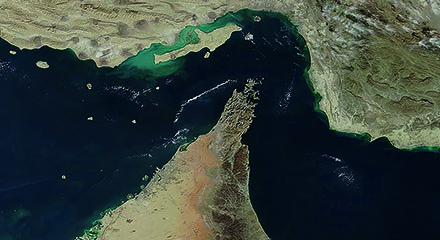
The global dimension of the conflict is most clearly expressed in the transformation of the Strait of Hormuz. Once one of the world’s busiest maritime corridors, it has effectively become a choke point. Traffic has fallen sharply. Passage is no longer routine: it requires explicit or implicit permission by Iranian authorities. Ships are delayed, rerouted or stranded, producing disruptions that extend far beyond the region. Of course, none of this should come as a surprise. Tehran had warned it would take such steps if it was attacked by the US and Israel. Iran’s geographical position is significant here. Its control over a long stretch of coastline along a narrow maritime passage gives it disproportionate leverage over global trade flows. This is not just a strategic advantage, but an economic one, allowing Iran to exert influence through disruption rather than direct confrontation.
The economic implications are often framed in terms of oil. Yet the effects are broader. Fertilisers, chemicals, helium and other industrial inputs are already in short supply. Agriculture, healthcare and manufacturing will all be affected.
What about Iran’s retaliatory strikes against Israel? In the absence of confirmed reporting, it is impossible to assess the extent and effect of the damage. However, the pattern of destruction between what is happening in Iran and what is happening in Israel differs markedly. Missiles have hit urban areas, causing casualties, damage to buildings and disruption to everyday life. These effects are visible, immediate and politically important. However, Israel’s advanced air defence systems and extensive civil defence infrastructure limit the consequences. The impact, while significant, remains, as far as I can tell, largely localised.
Taking all this into account, we should not mistake Iran’s survival as a victory. Remaining in power and managing to inflict serious damage on the enemy is good publicity for the regime, but it has its definite limits: while Iran has not collapsed, it has transformed into a state based on a system organised around survival. The system is resilient in the sense that it can absorb shocks, but this comes at a cost: deepening militarisation, increasing economic hardship for the masses and long-term structural tension.
Of course, the regime and its system may endure all of this. However, the question is not whether it will collapse in the immediate term, but what forms of instability it will generate over time. What we are witnessing is not a stable equilibrium, but a provisional arrangement: a state that survives, but does so by reorganising itself around the possibility of permanent war.